

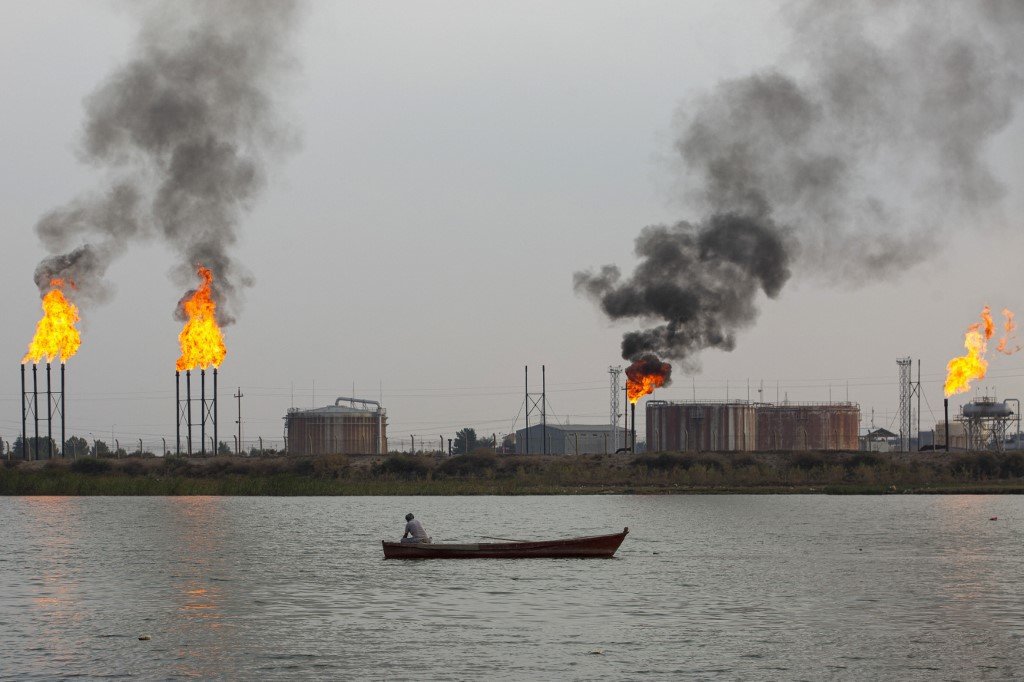
Iraq oil output cuts have begun to reshape the country’s energy strategy. Iraq plans to reduce production in several southern oil fields. The move comes after severe disruption in the Strait of Hormuz. That waterway handles a large share of global oil trade.
First, Iraq’s oil authorities studied the impact of shipping risks. Then they designed a four-stage emergency plan. The plan targets several major fields in southern Iraq. In total, nine oil fields may reduce or stop production.
Currently, Iraq produces about 4 million barrels of oil per day. However, the emergency plan may lower output to around 1 million barrels daily. Iraq’s oil output cuts, therefore, mark one of the largest sudden reductions in recent years.
Meanwhile, tensions across the Middle East continue to grow. Conflict between the United States, Israel, and Iran has raised regional security concerns. As a result, several countries in the region face military strikes and threats.
Consequently, energy officials worry about oil infrastructure safety. They also worry about tankers traveling through the Gulf. Because of these risks, shipping companies have slowed or changed routes. Therefore, exports from many Gulf producers face uncertainty.
In response, Iraq has taken preventive steps. Officials want to protect oil infrastructure and energy stability. Therefore, they decided to manage production levels carefully. Iraq oil output cuts allow operators to reduce pressure on export systems.
At the same time, Iraq must protect its domestic energy needs. Electricity demand remains high across the country. Power plants rely heavily on associated gas from oil production. Because of this link, authorities plan gradual reductions instead of sudden shutdowns.
First, the strategy focuses on the Rumaila oil field. Rumaila ranks among the largest oil fields in Iraq. It also plays a key role in southern oil production. Therefore, adjustments at Rumaila influence national output quickly.
Next, other southern oil fields may follow similar reductions. Officials plan the decrease step by step. This approach allows engineers to maintain safe operations. It also protects wells and infrastructure from damage.
Furthermore, energy planners monitor regional developments closely. Shipping conditions in the Strait of Hormuz remain uncertain. If tensions rise further, Iraq may extend production limits. However, if stability returns, output could recover.
In addition, oil markets around the world watch Iraq closely. Iraq ranks among the largest oil producers in OPEC. Therefore, Iraq’s oil output cuts could influence global oil prices.
Higher prices may follow reduced supply. At the same time, traders may react to geopolitical risks. Consequently, energy markets remain sensitive to every new development.
Moreover, Iraq’s strategy shows how energy producers adapt during crises. The government wants to balance exports, security, and electricity supply. Therefore, gradual production cuts offer flexibility during uncertain conditions.
Finally, the coming weeks will test the emergency plan. Engineers will evaluate field performance and export capacity. Meanwhile, policymakers will study market reactions and regional security trends.
For now, Iraq’s oil output cuts represent a defensive energy strategy. The plan protects infrastructure while maintaining essential gas supplies. At the same time, officials aim to prevent more serious economic damage.