

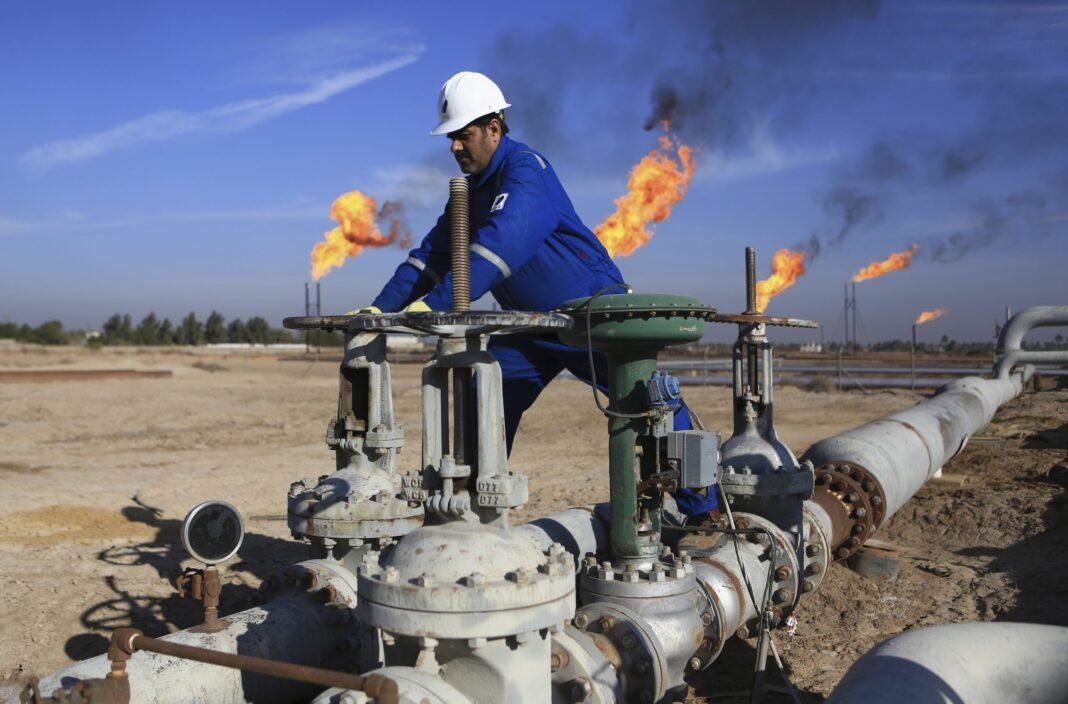
Baghdad – Goldman Sachs sharply cut Iraq’s oil output forecast for 2026 after a review showed the country failed to hit earlier production estimates. Analysts at Goldman Sachs lowered Iraq’s expected crude output, citing ongoing output shortfalls and slower-than-expected growth. Iraq oil falls short of goals, and this shift could reshape market expectations.
The revised forecast comes as the global financial institution updated its oil market outlook for 2026. Goldman Sachs raised its predictions for Brent and West Texas Intermediate (WTI) crude prices in late 2026, but it reduced the total oil supply estimates for several key producers. Analysts said Iraq, along with Iran, Venezuela, and Kazakhstan, delivered less oil than previously predicted.
Goldman Sachs linked Iraq’s output challenges to operational limits and a slower increase in production capacity. The firm said field maintenance problems, infrastructure issues, and delayed development projects constrained monthly production levels. These problems forced a cut to its Iraq oil production forecast for the full year 2026.
Economists noted that Iraq’s crude output has long struggled with logistics and investment gaps. Despite high ambitions to raise daily production, Iraq failed to match the bank’s earlier projections. The revised outlook signals a major revision to global supply forecasts.
Meanwhile, Goldman Sachs kept its firm view that global oil markets will see a supply surplus in 2026. The institution said it expects the market to remain oversupplied if no major disruptions hit crude flows worldwide. Banks and traders watch these developments closely, given the delicate balance between supply and demand in the oil market.
In its updated forecast, Goldman Sachs raised Brent crude prices to about $60 per barrel and WTI to $56 per barrel in the fourth quarter of 2026. These figures show a higher price path for late-year contracts than earlier estimates, reflecting tighter inventories among major consumer nations. Yet the broader forecast still assumes excess supply remains in place through the year.
Goldman analysts also updated expectations for major producing regions outside the Middle East. They raised supply projections for several core OPEC+ producers that have spare capacity. The bank said production in the Americas will slowly climb in the second quarter of 2026, assuming no sudden increase in inventories.
Iraq’s own growth plans face headwinds despite these broader market shifts. Baghdad has ambitious goals to expand export capacity and raise output toward longer-term targets far above current levels. However, these plans hinge on improved field performance, foreign investment, and stable global prices. Economists warn that failing to resolve these issues could limit Iraq’s ability to benefit from rising oil demand later in the decade.
Market watchers said the Iraq oil falls short scenario highlights deeper structural limits in the sector. They pointed to bottlenecks in transportation, aging export facilities, and a lack of efficient recovery techniques in mature fields. Such constraints may slow Iraq’s ability to narrow the gap between target and actual output.
In response, officials in Baghdad have pledged efforts to boost production through partnerships with international energy firms. They aim to modernize existing fields and invest in new development projects. Still, implementation timelines remain unclear, and immediate growth may stay muted.
Economists argue Iraq must prioritize infrastructure upgrades and streamline licensing to attract fresh investment. If the sector improves, Iraq could narrow the prediction gap and strengthen its role in global oil markets. For now, however, Iraq’s oil falls short of earlier forecasts.