

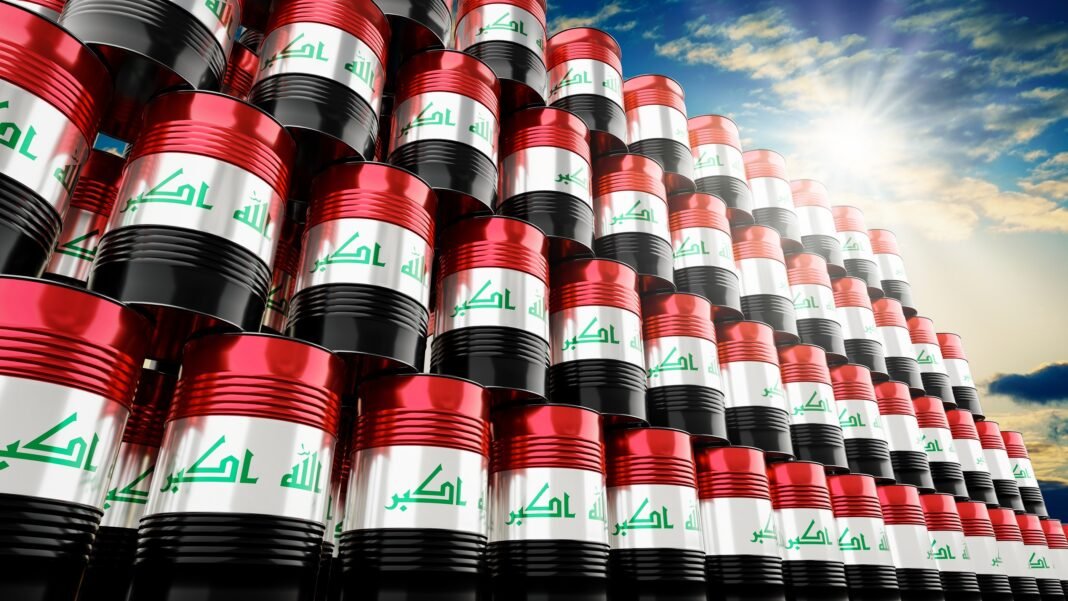
Iraq continues to strengthen its energy position through consistent production and export planning. First, officials confirmed average daily shipments near 3.6 million barrels. Moreover, authorities emphasized steady flows despite regional and global pressures. Therefore, Iraq oil exports remain central to national economic stability and planning. Additionally, policymakers link export discipline with long-term market credibility.
At the same time, southern oil fields continued to dominate overall output volumes. Meanwhile, northern production supported exports with additional supply. Specifically, fields in the Kurdistan region contributed around 200,000 barrels per day. Consequently, regional participation reinforced national energy coordination. Furthermore, cooperation reduced friction between Baghdad and Erbil.
In addition, the federal government focused on resolving financial obligations to producers. Officials transferred overdue payments to operating oil companies. As a result, confidence improved among international and regional partners. Moreover, these payments supported continued investment in production infrastructure. Therefore, stable financial commitments encouraged uninterrupted output.
Meanwhile, monthly revenue from northern oil sales reached nearly 400 million dollars. Accordingly, these earnings strengthened public finances and budget flexibility. Also, energy income helped cover operational and social expenditures. Thus, oil revenues continued to support economic resilience across Iraq.
Previously, Iraq halted northern exports through the Turkey pipeline for an extended period. However, leaders later chose economic pragmatism and dialogue. Consequently, Iraq resumed pipeline operations to boost export capacity. Moreover, this move improved logistical efficiency and regional cooperation.
Despite steady flows, export volumes experienced moderate changes over time. For example, shipments declined slightly during certain periods. Nevertheless, officials maintained production discipline under international agreements. Therefore, Iraq balanced export ambitions with global oil market responsibilities.
In particular, Iraq honored voluntary output limits set by OPEC+ partners. As a result, authorities avoided aggressive production increases. However, officials still adjusted shipments when conditions allowed flexibility. Thus, Iraq oil exports reflected strategic control rather than reactive decisions.
Toward later periods, shipments fell more sharply due to planned reductions. Importantly, leaders framed these cuts as market-stabilizing actions. Moreover, officials stressed long-term price support over immediate revenue. Consequently, Iraq reinforced its reputation as a reliable energy producer.
Overall, Iraq oil exports continue to guide national energy and economic strategy. Therefore, policymakers prioritize balance between revenue, stability, and international trust. Additionally, sustained exports support currency strength and investor confidence. Finally, Iraq aims to protect its energy future through careful planning.