

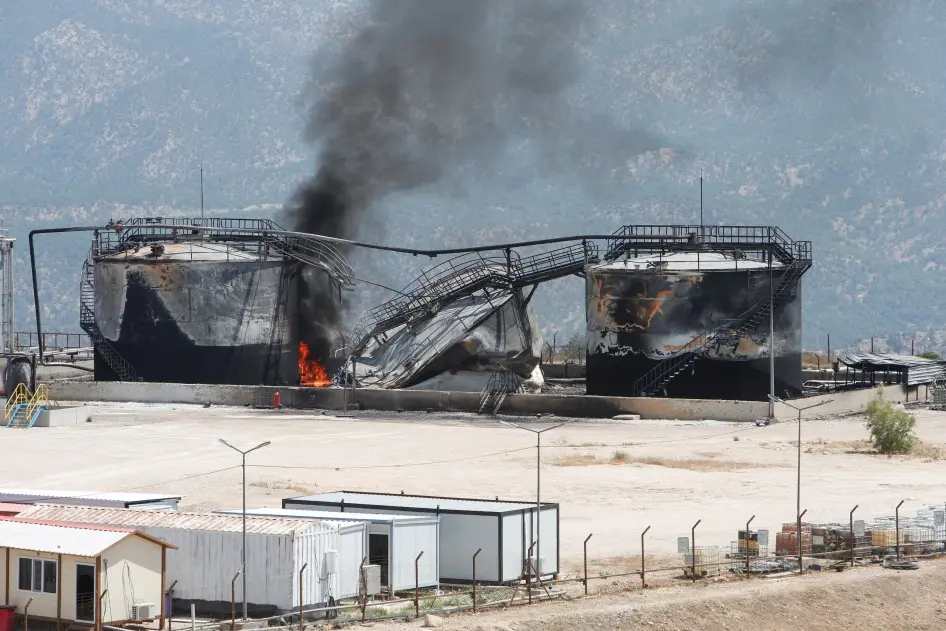
Iraq’s oil crisis deepens as a drone strike targets key energy infrastructure in the southeast. Officials confirmed the attack on storage facilities at the Buzurgan oil field in Maysan Province. Iraq’s oil crisis deepens as security risks disrupt production and exports.
First, the Iraqi Ministry of Oil reported the incident without casualties. However, the strike caused damage to storage units. This attack highlights growing threats to oil infrastructure. Therefore, Iraq’s oil crisis deepens under rising regional tensions.
Moreover, drone attacks have increased across Iraq in recent months. These incidents followed the escalation involving Iran, the United States, and Israel. As a result, oil facilities have become strategic targets.
At the same time, Iraq faces a sharp decline in oil exports. Shipments dropped from 3.4 million barrels per day to about 250,000 bpd. This massive fall shows the scale of disruption. Consequently, Iraq’s oil crisis deepens as export capacity collapses.
In addition, storage capacity has reached critical levels. The closure of the Strait of Hormuz blocked a key export route. This situation forced Iraq to store more oil domestically. However, limited storage space increased pressure on production systems.
Furthermore, oil field output has dropped significantly. Production fell by nearly three-quarters compared to normal levels. This decline reflects both logistical barriers and security threats. Therefore, Iraq’s oil crisis deepens due to reduced operational capacity.
Meanwhile, Iraq’s economy faces serious consequences. Oil revenue accounts for over 90% of the national budget. This heavy reliance increases vulnerability during disruptions. As exports fall, government finances weaken rapidly.
In addition, authorities struggle to manage the economic impact. Reduced income limits public spending and development plans. At the same time, energy instability affects investor confidence.
Looking ahead, restoring export routes remains critical. Reopening key shipping lanes could stabilize oil flows. Improving infrastructure security will also play a major role. Without these steps, production recovery may remain slow.
In conclusion, Iraq’s oil crisis deepens as drone attacks and export disruptions hit the sector hard. Falling production and blocked routes create serious economic risks for the country.