

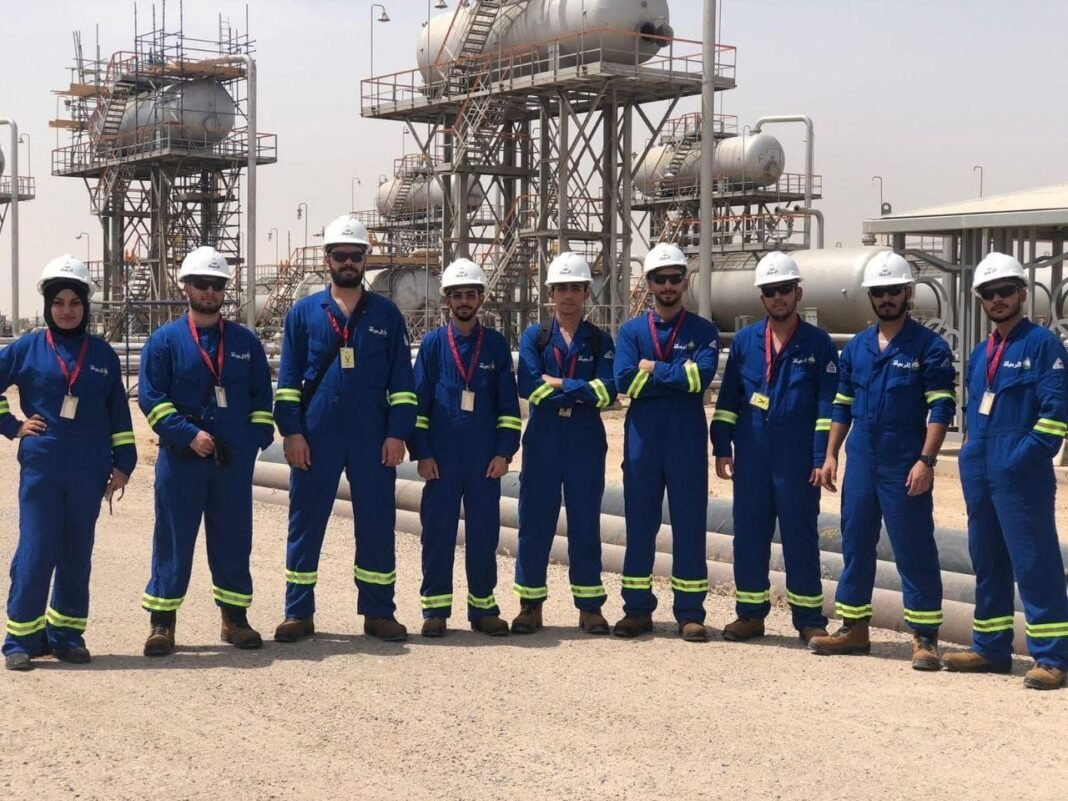
Iraq has approved a major education project in the south. The Iraq oil and gas university will rise in Basra. Therefore, authorities aim to support the national energy sector. Moreover, the project links education directly with industry needs.
The Ministry of Planning approved the project framework. Officials selected a design and construct model. Consequently, planning and execution will move faster. This approach reduces delays and improves coordination.
Funding will come directly from oil revenues. The government allocated about 918 billion Iraqi dinars. This amount equals nearly $695 million. Therefore, the project reflects strong financial commitment.
The Iraq oil and gas university will train future specialists. It will prepare engineers for oil operations. In addition, it will train technicians for gas facilities. Thus, graduates will meet sector demands.
Basra plays a central role in Iraq’s energy production. The province hosts major oil and gas fields. Therefore, placing the university in Basra makes strategic sense. Students will study close to real operations.
Local officials described the project as a qualitative step. They emphasized improvements in educational infrastructure. Moreover, they highlighted long term benefits for youth. As a result, the project gained local support.
The university will focus on practical and applied learning. Students will study drilling, production, and processing. In addition, programs will cover safety and maintenance. Therefore, graduates will enter the workforce ready.
The Iraq oil and gas university also supports workforce localization. Iraq often relies on foreign expertise. However, this project aims to reduce that dependence. Consequently, national skills will increase.
Education reform links closely with economic policy. Iraq still depends heavily on oil income. Therefore, investing in energy education protects that income. Skilled workers help maintain production levels.
Oil revenues dominate the national budget. Energy exports fund most public spending. Because of this, officials prioritize energy sustainability. Education forms a key pillar of that strategy.
Government data shows strong oil income levels. Oil contributes about 88 percent of federal revenue. Non oil sources provide only 12 percent. Therefore, diversification remains limited.
Non oil revenue reached about 13.48 trillion Iraqi dinars. This amount equals nearly $10 billion. However, oil revenue exceeded 114 trillion Iraqi dinars. These numbers explain policy priorities.
The Iraq oil and gas university supports long term diversification indirectly. Skilled graduates can support petrochemicals and energy services. Therefore, value chains can expand. This expansion may increase non oil income later.
Basra residents expect economic benefits from the project. Construction will create jobs. Later, academic operations will need staff. Thus, employment opportunities will grow.
The university will also attract research activity. Researchers can study local reservoirs and technologies. Moreover, cooperation with energy companies may increase. This environment supports innovation.
Regional development stands as another goal. Southern provinces seek better education facilities. Therefore, the project balances national development. It reduces concentration in central cities.
Students from across Iraq may enroll. Basra could become an energy education hub. Consequently, academic mobility will increase. This change strengthens national integration.
The project also sends a political message. Iraq invests oil wealth into human capital. Therefore, revenues convert into lasting assets. This approach supports sustainable development.
Planning authorities expect the project to progress in stages. Design work will come first. Construction will follow immediately. Thus, timelines remain efficient.
Education experts welcomed the initiative. They stressed alignment with labor market needs. Moreover, they praised sector specific universities. This model matches global practice.
The Iraq oil and gas university reflects strategic thinking. It connects education, economy, and energy. Therefore, the project holds national importance. Its impact will extend beyond classrooms.
In conclusion, Iraq moves to strengthen its energy future. The Basra university will train skilled professionals. Moreover, it will support economic stability. This investment shows long term vision.