

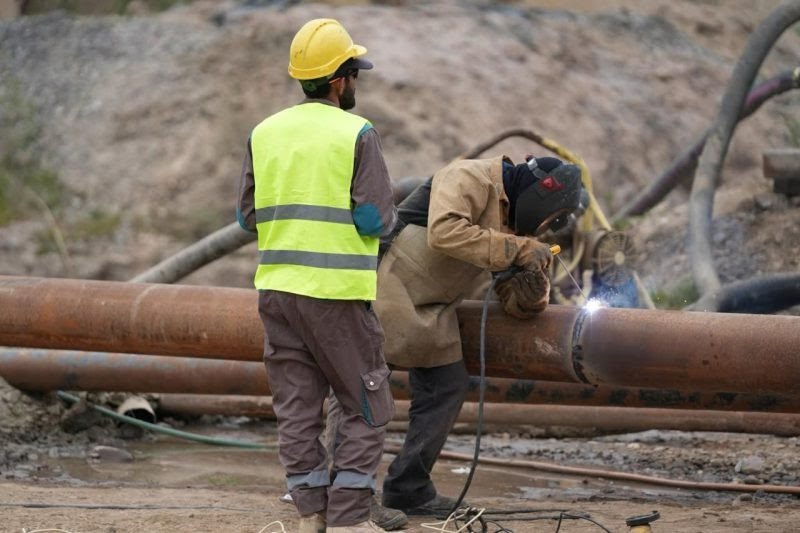
Iraq now drives a Northern Pipeline Push to restore oil exports and reduce pressure on its energy sector. This Northern Pipeline Push gains urgency as regional tensions disrupt southern export routes. Therefore, officials now focus on fast repairs and continuous operations.
First, engineers now work around the clock in Saladin province. They run three daily shifts to speed up progress. Crews also conduct hydrostatic testing on the main pipeline. In addition, they test a connected 32-node feeder line to ensure full functionality.
Moreover, officials confirm that work follows strict timelines. Teams quickly solve any technical problems. As a result, progress continues without major delays. This approach helps maintain steady momentum across the project.
At the same time, senior leadership actively monitors the final stages. Hadeer Jaloub visited the project site to inspect ongoing work. Furthermore, project leaders held meetings to review progress and coordinate efforts. These actions strengthen oversight and improve efficiency.
The pipeline plays a vital role in Iraq’s export strategy. The Iraq-Turkiye Crude Oil Pipeline stretches about 970 kilometers. It links northern oil fields in Kirkuk to the Mediterranean port of Ceyhan. However, repeated attacks halted most operations since 2014.
Recently, Iraq restarted part of the route. The country now pumps about 250,000 barrels per day through the pipeline. This step followed an agreement between Baghdad and Erbil. Consequently, the northern corridor regained importance in national exports.
Meanwhile, southern export routes face serious disruption. Ongoing conflict in the region has closed key maritime paths. As a result, tankers cannot access Iraq’s Gulf terminals. This situation has sharply reduced export capacity.
Production in southern oil fields has also dropped significantly. Output now stands near 800,000 barrels per day. Previously, it reached about 4.3 million barrels per day. Therefore, Iraq faces a major decline in oil revenue.
In addition, storage facilities have reached critical levels. Oil now accumulates due to limited export options. This pressure forces authorities to act quickly and find alternatives. The Northern Pipeline Push now serves as a key solution.
Furthermore, Hayan Abdul Ghani confirmed that the government is studying new export routes. He also stated that refineries across Iraq operate at full capacity. This effort ensures a steady fuel supply for domestic markets.
Overall, the Northern Pipeline Push reflects Iraq’s urgent response to shifting geopolitical risks. It highlights the country’s effort to secure stable export channels. As challenges continue, Iraq relies more on northern infrastructure. The Northern Pipeline Push will shape future energy strategies and trade flows.