

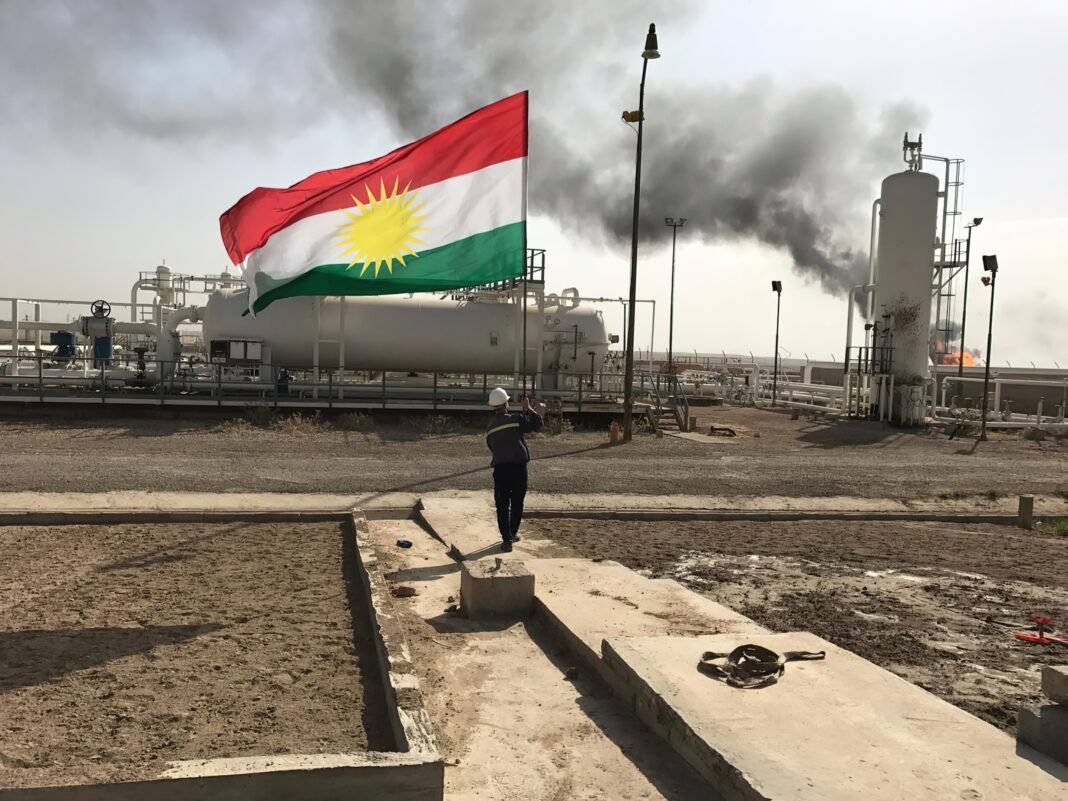
Iraq has pushed northern oil exports above 200,000 barrels per day, marking clear oil export growth. The increase supports national revenue goals. It also strengthens coordination between Baghdad and Erbil.
Oil Minister Hayan Abdul Ghani confirmed that exports from the Kurdistan Region now range between 200,000 and 210,000 barrels per day. He stressed that this progress brings Iraq closer to its export targets. Moreover, he said Iraq continues to raise total shipments steadily.
Currently, Iraq exports more than 3.4 million barrels per day. However, officials aim to exceed 3.45 million barrels daily in the near term. Furthermore, Iraqi law requires exports of around 3.5 million barrels per day. The government depends on this level to cover public spending.
Each month, Iraq spends about nine trillion Iraqi dinars. That equals nearly $6.86 billion. Therefore, steady oil export growth remains critical for budget stability. Without strong exports, Iraq would face financial pressure.
Iraq ranks as OPEC’s second-largest producer after Saudi Arabia. The country produces an average of 4.4 million barrels per day. Out of that volume, Iraq exports around 3.4 million barrels daily. These figures show how central oil export growth remains to the national economy.
Earlier, northern exports stopped for more than two years. Authorities halted flows in March 2023. As a result, about 450,000 barrels per day disappeared from global markets. Those barrels usually traveled through the Kirkuk-Ceyhan pipeline toward Turkey’s Mediterranean coast.
However, negotiations between Baghdad and the Kurdistan Regional Government reopened the route. Oil shipments resumed in September after both sides reached an agreement with operating companies. Consequently, northern exports began rising again.
Later, in late December, Baghdad, Erbil, and international oil firms extended the arrangement for another three months. This decision secured a steady supply during the first quarter of 2026. In addition, Iraq’s State Oil Marketing Organization continues talks to extend the deal further.
Thanks to these steps, oil export growth has regained momentum. The return of northern flows supports federal export totals. It also improves relations between the central government and regional authorities.
Meanwhile, global oil markets watch Iraq closely. Any increase in Iraqi exports influences supply expectations. Therefore, sustained oil export growth strengthens Iraq’s position within OPEC.
Looking ahead, officials want to push exports beyond 3.5 million barrels per day. They believe consistent northern shipments will help achieve that milestone. If Iraq maintains coordination and stability, oil export growth will continue shaping its economic outlook.