

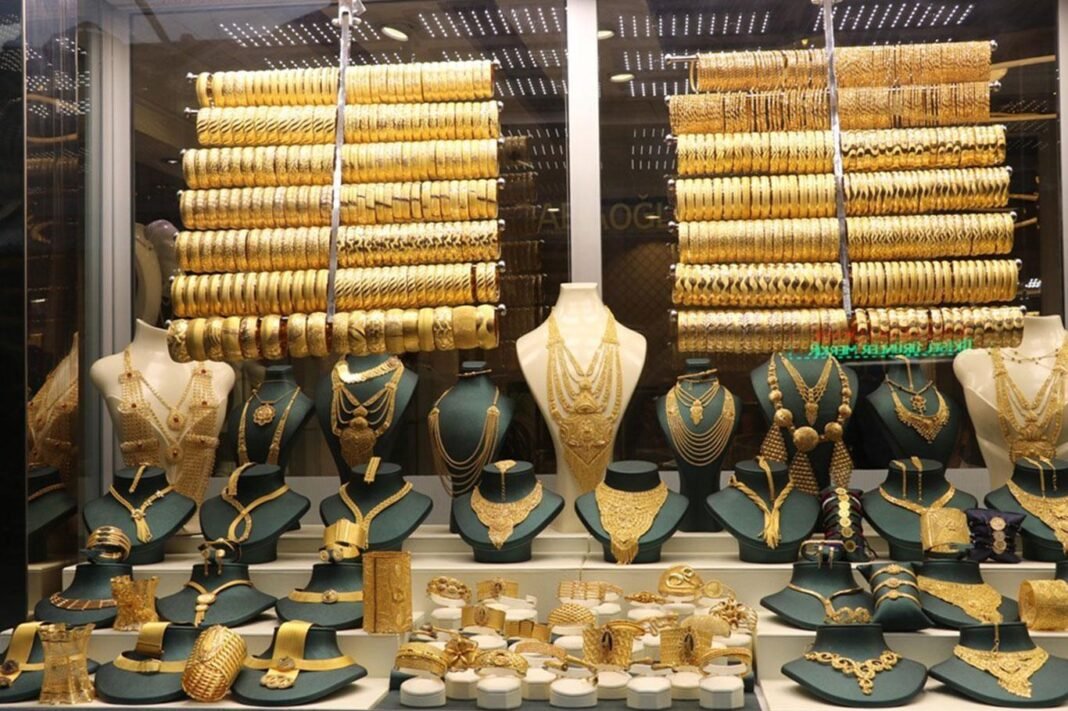
Iraq sees a steady rise in Iraq gold prices across Baghdad and Erbil markets. Investors and shoppers notice the upward trend, which affects trade and savings decisions. Gold now hovers around 1.11 million IQD per mithqal, reflecting growing demand and market confidence.
In Baghdad, 21-carat gold recorded a selling price of 1,171,000 IQD per mithqal. Buyers paid 1,167,000 IQD for the same gold. This price marks an increase from the previous session, when it sold for 1,141,000 IQD. Gulf, Turkish, and European gold varieties all contributed to this rise.
Iraqi 21-carat gold sold slightly lower, between 1,140,000 and 1,150,000 IQD per mithqal. Jewelry stores reported similar ranges, with Gulf gold reaching 1,170,000 to 1,180,000 IQD. These steady increases reflect both local and international influences on the market.
In Erbil, 22-carat gold reached 1,235,000 IQD per mithqal. Meanwhile, 21-carat gold sold for 1,180,000 IQD, and 18-carat gold for 1,010,000 IQD. Buyers and jewelers monitor these changes closely, as gold remains a key investment in Iraq.
Analysts note that Iraq gold prices respond to global trends and local demand. Political stability, import levels, and currency fluctuations affect how prices move. As a result, buyers often adjust purchasing strategies daily.
The rising Iraq gold prices also impact the jewelry market. Higher costs influence sales of rings, necklaces, and investment bars. Retailers balance demand with pricing to maintain customer interest.
Meanwhile, many investors view gold as a safe haven amid economic uncertainty. With fluctuating currency values and inflation concerns, gold provides a secure alternative to cash. Demand from citizens and traders supports continuous price increases.
Additionally, Baghdad and Erbil markets remain central hubs for trading precious metals. Sellers in both cities set prices based on supply, demand, and international benchmarks. Shoppers watch market updates to make informed decisions.
Overall, Iraq gold prices reflect a combination of economic, social, and international factors. Rising prices influence consumer behavior, investment strategies, and jewelry trade. Traders, investors, and citizens all remain attentive to daily changes.