

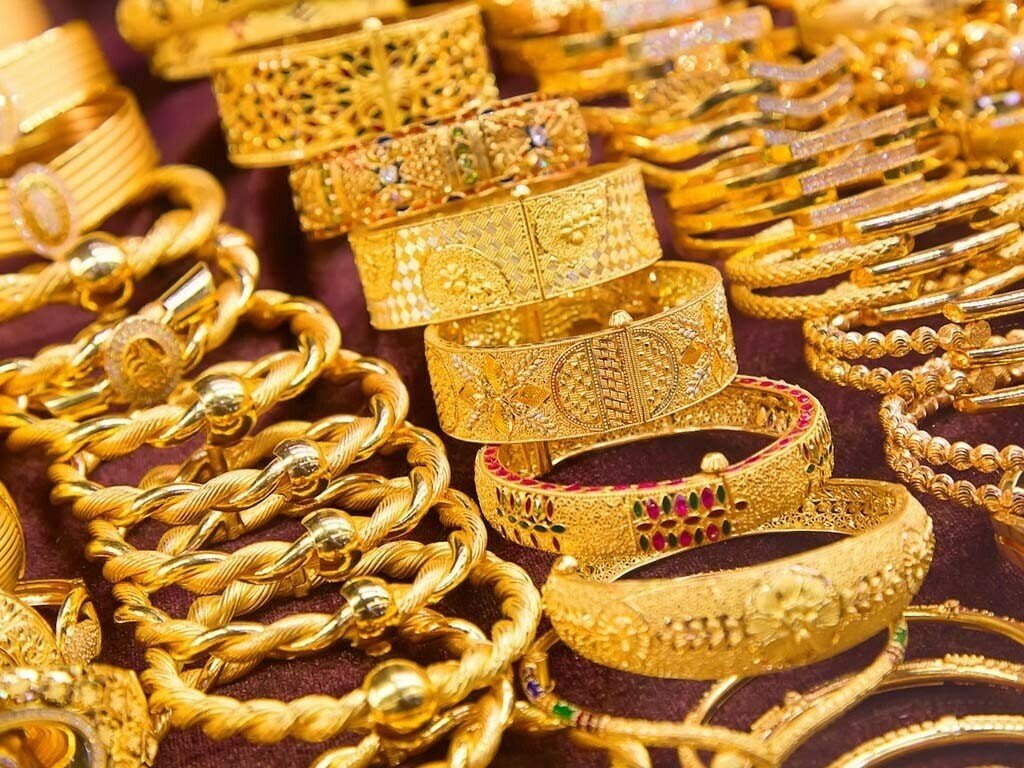
Gold prices in Iraq showed mixed trends this week. In Baghdad, gold held steady, while in Erbil, the metal edged higher. This movement reflected continuing interest in bullion across the region. Many traders and investors closely monitored local markets for updates.
In Baghdad’s Al-Nahr Street wholesale market, 21-carat foreign gold — from Gulf, Turkish, and European sources — sold at 850,000 IQD per mithqal. Buyers paid 846,000 IQD per mithqal. These rates remained the same as the previous day. Iraqi-made 21-carat gold also stayed flat, selling at 820,000 IQD and buying at 816,000 IQD. Retail jewelry prices, however, showed small differences. Foreign 21-carat gold sold between 850,000–860,000 IQD per mithqal. Iraqi pieces ranged from 820,000–830,000 IQD, depending on workmanship and store margins.
Erbil experienced slightly stronger growth in gold prices. Traders reported that 22-carat gold reached 888,000 IQD, while 21-carat climbed to 848,000 IQD. Meanwhile, 18-carat gold traded at 727,000 IQD. Analysts explained that the rise in Erbil reflected local demand and seasonal factors affecting the market. Many buyers in Erbil reacted quickly to these changes, increasing sales volume in some shops.
Financial experts emphasized that gold prices in Iraq depend on multiple factors, including global trends, regional supply, and investor sentiment. The steady rate in Baghdad suggests cautious trading, while the upward movement in Erbil highlights growing demand. This trend shows that market activity varies between cities, even within the same country.
Moreover, economists pointed out that gold often acts as a safe investment during economic uncertainty. Traders recommend careful monitoring of rates before making large purchases. Citizens and jewelers alike are paying attention to these price trends to plan sales and investments. Analysts also noted that the difference between wholesale and retail rates continues to impact consumer decisions.
Overall, Baghdad shows stability in gold prices, while Erbil experiences moderate increases. The gold market in Iraq remains dynamic, reflecting both local and global influences. Investors, shop owners, and citizens continue to follow the trends closely, responding to daily fluctuations in rates.