

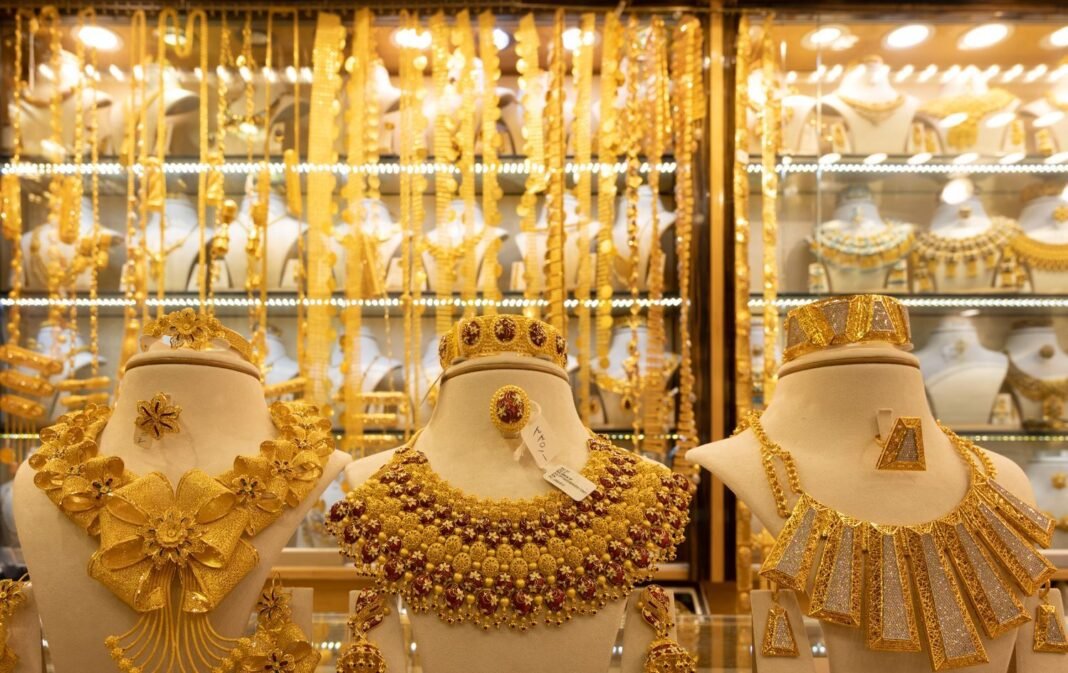
Gold prices held steady in Baghdad at 1.120 million IQD per mithqal, while Erbil recorded gains of 12,000 IQD. Traders reported balanced demand in the capital. Meanwhile, buyers in Erbil pushed prices slightly higher.
In Baghdad’s main gold market on Al-Nahr Street, 21-carat gold sold for 1.120 million IQD per mithqal. One mithqal equals five grams. Dealers bought the same type at 1.116 million IQD. Prices matched the previous session, so gold prices remained stable in the capital.
Iraqi 21-carat gold sold for 1.090 million IQD per mithqal in Baghdad. Traders bought it at 1.086 million IQD. Therefore, local gold varieties traded below imported Gulf and Turkish products.
In jewelry shops across Baghdad, 21-carat Gulf gold ranged between 1.120 million and 1.130 million IQD per mithqal. At the same time, Iraqi gold ranged between 1.090 million and 1.100 million IQD. This variation reflected brand preference and craftsmanship differences.
However, Erbil markets showed upward movement. Dealers sold 21-carat gold for 1.137 million IQD per mithqal. That price marked an increase of about 12,000 IQD. Consequently, gold prices in Erbil moved ahead of Baghdad levels.
In addition, 22-carat gold in Erbil reached 1.190 million IQD per mithqal. Meanwhile, 18-carat gold traded at 975,000 IQD. These figures show active demand for higher purity gold in the Kurdistan Region market.
Gold prices often react to currency movements and global trends. When the US dollar strengthens, local gold prices can fluctuate. Therefore, traders monitor both international markets and domestic exchange rates.
Despite regional differences, gold prices overall remain within recent ranges. Baghdad buyers appear cautious. On the other hand, Erbil buyers showed stronger interest during trading hours.
Market observers expect continued fluctuation in the coming sessions. If global gold prices shift, local markets will adjust quickly. For now, gold prices in Iraq reflect stability in Baghdad and moderate gains in Erbil.