

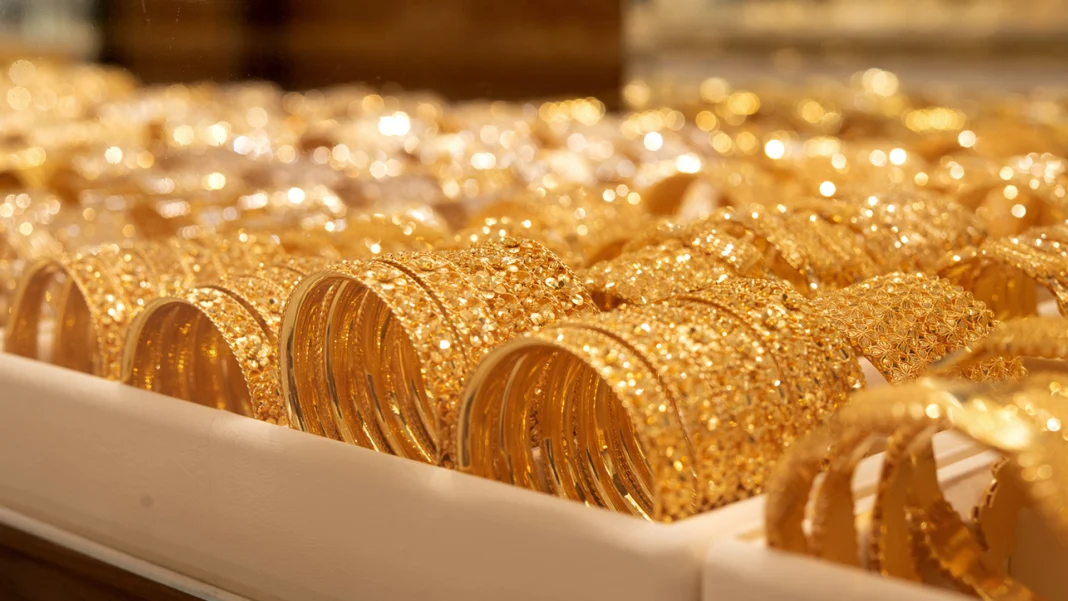
Gold prices in Iraq showed mixed movements this week, with declines in Baghdad and slight increases in Erbil. Traders noted that market fluctuations reflect both local demand and international gold trends. Analysts suggest that economic activities, investor sentiment, currency fluctuations, and regional political developments continue to influence gold trading, while seasonal buying patterns also affect market behavior.
In Baghdad’s al-Nahr Street wholesale market, one mithqal of 21-carat Gulf, Turkish, and European gold sold for 746,000 IQD. Buyers paid 742,000 IQD, down from 755,000 IQD in previous trading sessions. Iraqi gold of the same weight sold for 716,000 IQD, while buyers offered 712,000 IQD. Therefore, these movements signal cautious activity among investors and jewelers in the capital.
Additionally, at jewelry stores in Baghdad, 21-carat Gulf gold traded between 745,000 and 755,000 IQD per mithqal. Meanwhile, Iraqi gold ranged from 715,000 to 725,000 IQD. Traders explained that these price variations depend on gold type, craftsmanship, and customer demand.
In contrast, Erbil saw slight increases in gold prices. Local 22-carat gold sold for 798,000 IQD per mithqal, 21-carat gold traded at 762,000 IQD, and 18-carat gold reached 653,000 IQD. Traders in Erbil said that strong demand from jewelry buyers and ongoing investment interest supported these small gains.
Therefore, the gold market in Iraq remains highly sensitive to regional and global trends. Changes in supply, international gold rates, investor behavior, and political developments directly impact prices. Additionally, gold continues to serve as a key investment option for many Iraqis seeking to protect their wealth.
In conclusion, Iraq’s gold market illustrates the dynamic nature of commodity trading. Investors, jewelers, and consumers actively monitor Baghdad and Erbil prices to make informed decisions. Market participants expect fluctuations to continue as economic conditions evolve, especially in response to global gold movements, regional political developments, and currency exchange trends.