

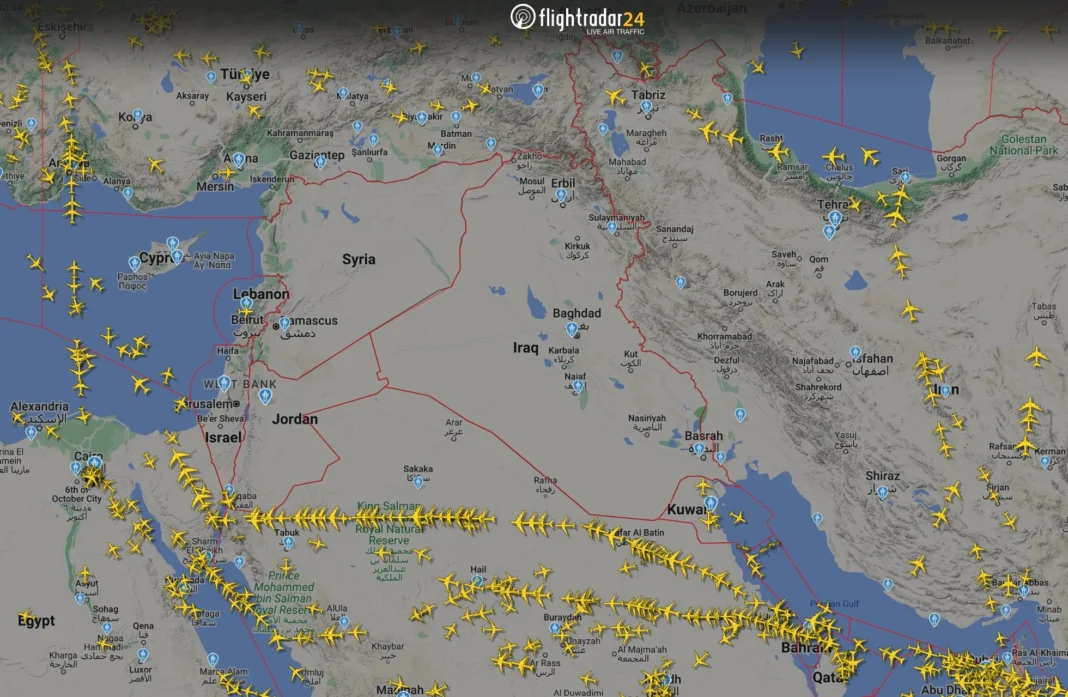
Iraq is facing steep financial losses as the closure of its airspace continues due to regional conflict. The impact grows more serious each day, affecting multiple parts of the aviation sector. The airspace closure in Iraq now costs the country over $250,000 daily, according to a government official.
A lawmaker from the Parliamentary Transport Committee warned about the ongoing losses. He said Iraq used to host over 500 aircraft crossings per day before the regional war began. Each flight paid Iraq a fee of $450 for airspace usage. These fees once generated millions of dollars each month.
Now, Iraq earns nothing from those airspace fees. At the same time, the country is missing out on more than just overflight revenue. The conflict has reduced both incoming and outgoing flights. This decline has hit several key sectors, including airline services, ticket sales, and airport operations.
These issues hurt not only national income but also the aviation industry’s future. Airport employees and service providers report falling work levels. The sudden drop in airline activity has triggered economic shockwaves across several provinces.
The airspace closure in Iraq affects both government finances and private businesses. Airlines that depend on Iraqi routes must now find alternative paths, often at greater cost. This situation has also affected regional travel, especially for neighboring countries that rely on Iraq’s air corridor.
The lawmaker has urged the Ministry of Transport to take action. He said officials must document all losses and create an official report. This document should support a formal complaint by the Ministry of Foreign Affairs to the United Nations. Iraq wants compensation for these damages, calling them a direct result of regional military actions beyond its control.
Transport officials say they are already collecting relevant data. They also plan to coordinate with international organizations and other countries facing similar losses.
However, some experts say Iraq should move faster. They believe global attention may shift soon, making it harder to secure financial recovery. They suggest immediate diplomatic steps and stronger international cooperation.
If the airspace remains closed, Iraq’s aviation sector could suffer deeper setbacks. The government may also miss important chances to rebuild infrastructure or attract new airline partnerships.
For now, the airspace closure in Iraq stands as a costly consequence of a broader regional conflict.