

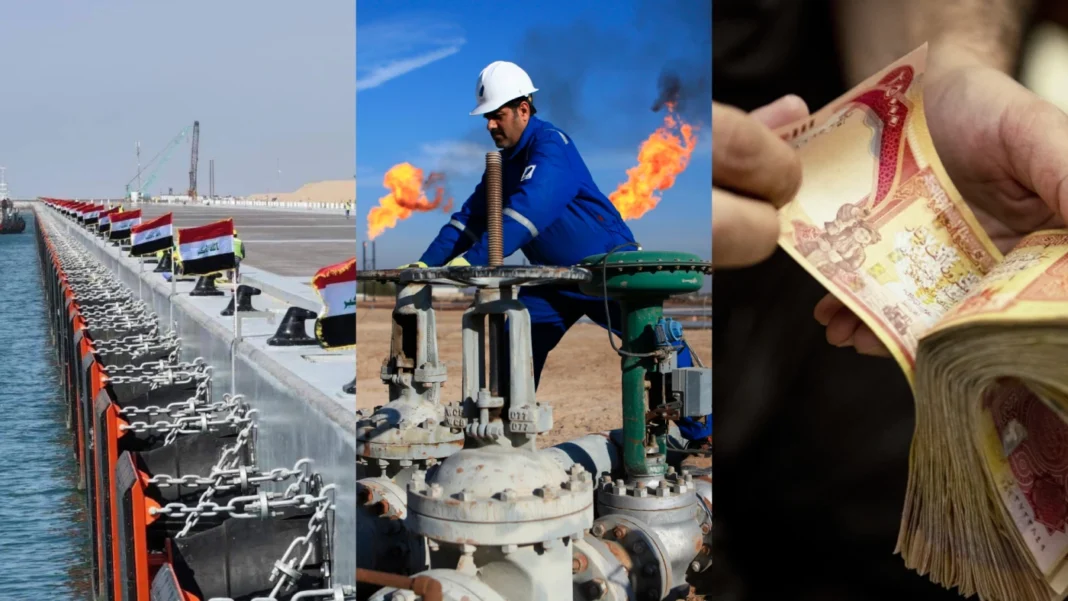
The Iraq economic freedom index exclusion highlights ongoing concerns about transparency and data availability. Moreover, global analysts continue to monitor Iraq’s economic reporting standards closely. As a result, Iraq remains outside one of the world’s key economic rankings.
First, the 2026 Index of Economic Freedom did not include Iraq. The report evaluates about 176 countries worldwide. However, Iraq did not qualify due to limited reliable economic data. In addition, weak transparency standards affected its eligibility. Therefore, Iraq joins a group of unranked countries for the third consecutive year.
Meanwhile, Iraq’s economic freedom index exclusion places the country alongside several others. These include Afghanistan, Libya, Somalia, Syria, Yemen, Liechtenstein, and Ukraine. Consequently, this absence reflects broader structural challenges. At the same time, it signals the need for improved economic reporting systems.
Furthermore, the index measures economic freedom using four main pillars. These pillars include rule of law, government size, regulatory efficiency, and open markets. In addition, the system evaluates 12 sub-indicators. Each country receives a score between 0 and 100. Therefore, analysts can compare global economic performance clearly.
On the other hand, several countries performed strongly in the latest ranking. Singapore ranked first with 84.4 points. Switzerland followed with 83.7 points. Ireland secured third place with 83.3 points. These countries benefit from strong property rights and open market systems. As a result, they attract consistent global investment.
In contrast, some countries ranked near the bottom of the index. Lebanon scored 43.1 points. Iran recorded 41.8 points. These low scores reflect economic challenges and limited market openness. Consequently, investors often approach these markets with caution.
Across the Arab region, rankings showed mixed performance. The United Arab Emirates led the region with 71.9 points. Qatar followed with 70.2 points. Oman ranked third with 68.5 points. These countries continue to improve business environments and attract foreign investment.
However, Iraq’s exclusion from the economic freedom index creates several challenges. Experts say the absence reduces investor confidence. Without clear data, investors cannot fully assess Iraq’s market conditions. Therefore, foreign investment decisions become more difficult.
Moreover, policymakers lose access to an important global benchmark. This benchmark could guide economic reforms and improve business conditions. In addition, accurate data would support better planning and policy decisions. As a result, experts call for stronger transparency and data systems.
In conclusion, Iraq faces ongoing challenges in meeting global economic standards. Improving transparency and data accuracy could help Iraq return to the ranking. Consequently, this step would strengthen investor trust and support economic growth.