

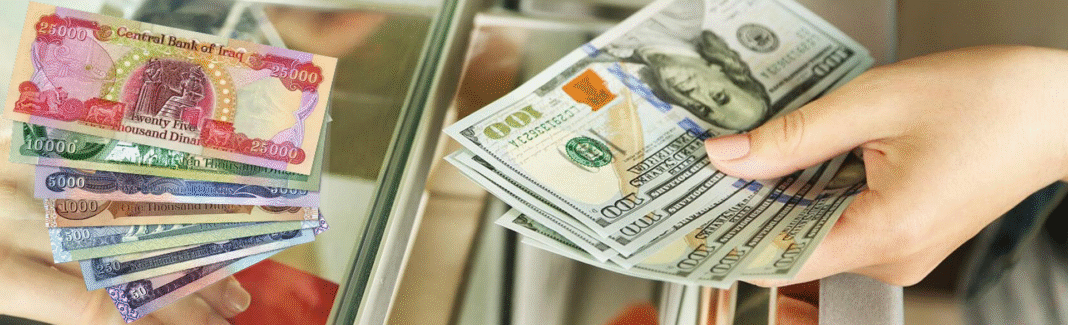
Dollar in Iraq continues to dominate currency discussions as Baghdad’s markets witness a notable change. At the same time, Erbil maintains stability in its rates. The fluctuations in Baghdad have sparked attention among currency traders and economic observers across Iraq.
To begin with, Baghdad’s currency exchange centers saw an uptick in the dollar’s value. In both Al-Kifah and Al-Harithiya central markets, the exchange rate climbed to 139,250 Iraqi dinars for every 100 US dollars. Previously, the rate was slightly lower, showing a clear upward trend.
Meanwhile, local exchange shops in Baghdad set different rates. The selling price hit 140,250 dinars for every 100 dollars. On the other hand, the buying rate dropped to 138,250 dinars. This spread between buying and selling prices reflects the increasing demand for the dollar in Iraq.
In contrast, Erbil showed no signs of similar volatility. The exchange rate there stayed consistent. The selling price reached 139,000 dinars, while the buying rate stood at 138,900 dinars per 100 dollars. These stable numbers highlight a more controlled market environment in the Kurdish region.
This variation between Baghdad and Erbil underscores different economic pressures. Baghdad’s markets often react faster to national economic news. Erbil’s financial sector, however, benefits from more regional stability. Thus, the “Dollar in Iraq” story remains a tale of two cities.
Moreover, many currency traders expect these trends to continue throughout the week. They point to supply shortages and rising demand in Baghdad as the main reasons. Also, external market influences affect the dinar’s local value, especially as import activity picks up pace.
In light of this, shoppers and businesses dealing with imports may feel the impact most. When the dollar rises, the cost of foreign goods increases. Consequently, daily expenses for many families could grow. The ongoing fluctuations of the dollar in Iraq make it harder for consumers to plan their spending.
At the same time, financial institutions monitor the situation closely. They aim to control sudden changes and provide market support. However, without new policies or interventions, experts believe the Dollar in Iraq will remain unstable.
In conclusion, the dollar in Iraq keeps making headlines. Baghdad experiences new highs, while Erbil holds firm. As the week unfolds, Iraq’s financial future may hinge on how both cities manage these shifting rates.