

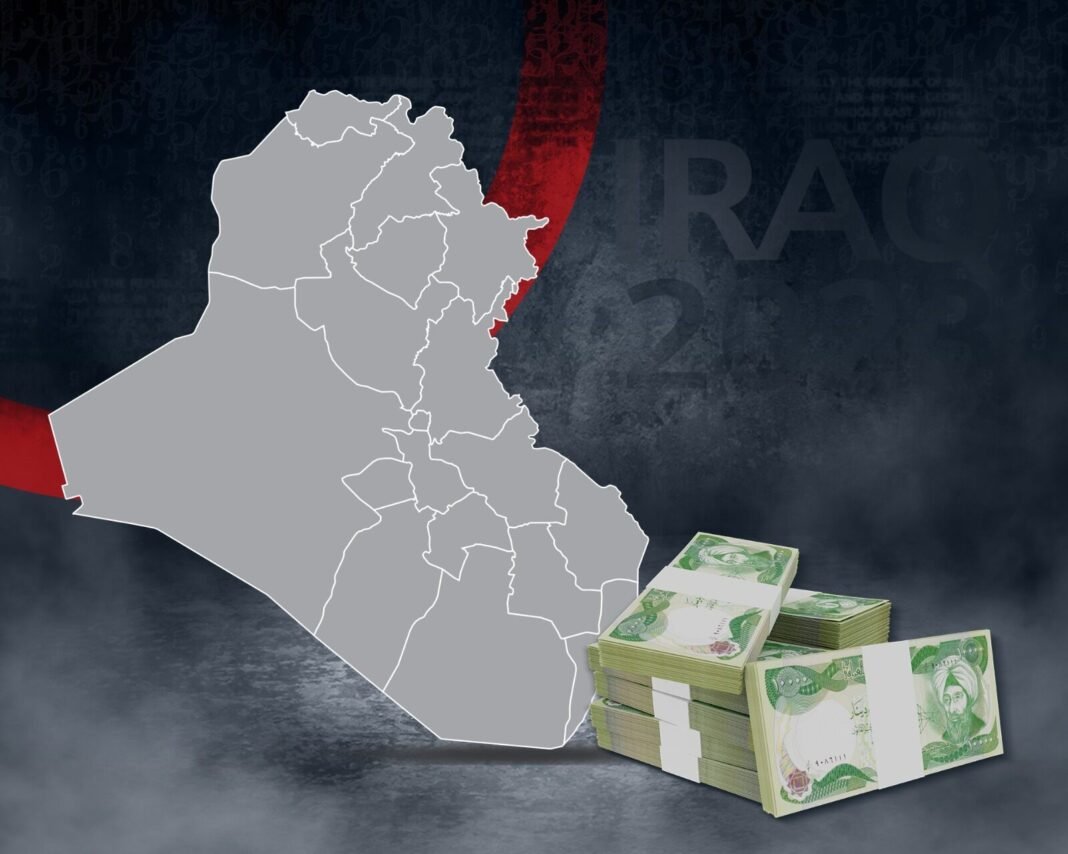
Iraq budget imbalance continues to shape economic debate across the country as spending keeps rising faster than income. Recent financial figures show clear pressure on state finances and policy choices. As a result, officials now face stronger calls for reform and discipline.
First, public income reached more than one hundred trillion Iraqi dinars during the reviewed period. However, government spending climbed well beyond that level. Consequently, the gap between earnings and expenses widened further. This trend worries economists and lawmakers alike.
Moreover, tax income formed only a small share of total state revenue. Taxes generated less than five trillion Iraqi dinars overall. Meanwhile, other income sources delivered nearly all remaining funds. Therefore, Iraq still relies heavily on non-tax revenue streams.
At the same time, government spending exceeded income by a large margin. Ministries increased operational costs across many sectors. Additionally, salaries and benefits continued to absorb significant resources. As a result, financial pressure intensified across public institutions.
Furthermore, the prime minister led economic discussions to address this imbalance. He gathered key ministers to review financial priorities. During the meeting, leaders focused on boosting revenue and limiting unnecessary expenses. They aimed to stabilize the economy and protect citizens.
In addition, officials emphasized protecting purchasing power and living standards. They highlighted support for low-income families and vulnerable groups. Therefore, policymakers linked spending control with social responsibility. They sought balance between reform and public welfare.
Meanwhile, the council discussed tax system reforms in detail. Members examined ways to expand the tax base fairly. They also explored improving collection efficiency. Through these steps, leaders hope to reduce reliance on volatile income sources.
At the same time, officials stressed the importance of private sector growth. They encouraged stronger cooperation between public and private enterprises. This approach aims to generate jobs and diversify income. Consequently, economic resilience could improve over time.
Moreover, leaders reviewed the performance of state-owned companies. They discussed methods to improve productivity and transparency. They also considered partnerships with private investors. These actions could reduce pressure on the national budget.
Later, the prime minister ordered reviews of public spending levels. He requested assessments of allocations for senior officials. This move signaled commitment to accountability and fairness. Therefore, leadership aimed to set an example.
Additionally, officials examined salaries and allowances within top institutions. They reviewed payments across the presidency, parliament, and cabinet. Through this process, they sought cost savings and efficiency. Such steps directly address the Iraq budget imbalance.
Furthermore, experts believe these reviews could strengthen public trust. Citizens often demand fairness in government spending. Clear action can improve confidence in reform efforts. Consequently, transparency remains a key priority.
However, analysts warn that reforms need consistency. Short-term actions alone cannot fix structural issues. Sustainable growth requires long-term planning and discipline. Still, current discussions mark an important starting point.
Overall, Iraq budget imbalance reflects deeper economic challenges. Revenue diversification, spending control, and institutional reform must move together. Otherwise, pressure on public finances may continue. Leaders now face crucial decisions for the country’s future.