

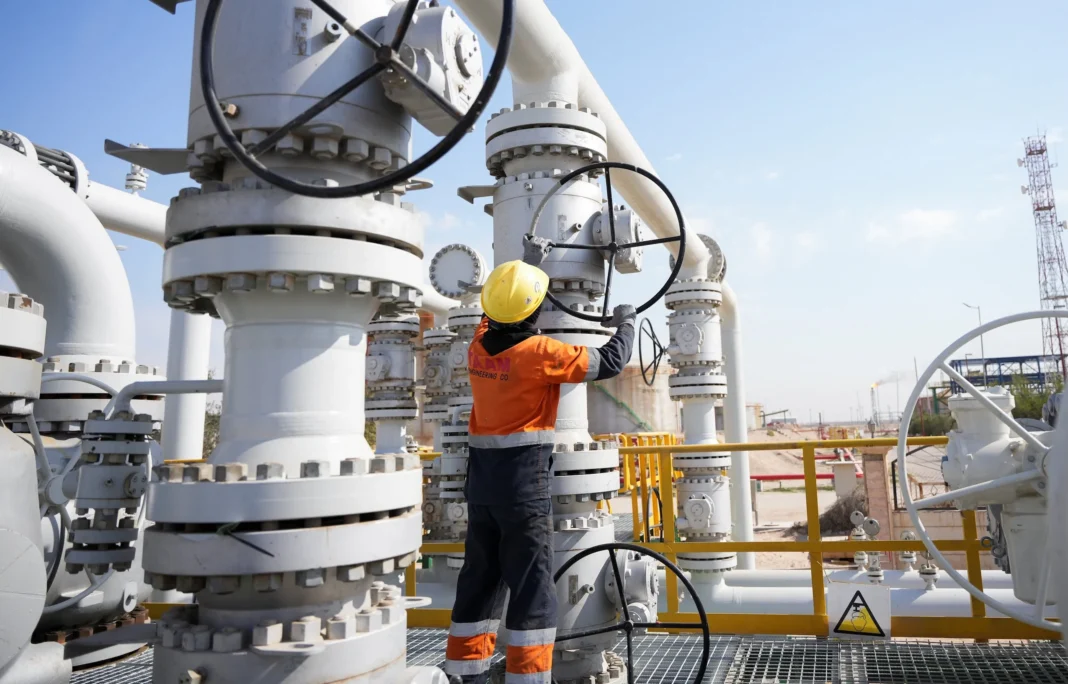
Baghdad moves quickly as Iraq boosts oil export routes to protect energy flows during regional instability. The government now focuses on new pathways after disruptions hit its main export system. Officials confirm that Iraq’s State Organization for Marketing of Oil expands agreements with multiple countries. These steps aim to secure steady crude and light oil exports despite rising tensions.
First, authorities launched negotiations with international shipping firms and buyers. They target export routes through Turkey, Jordan, and Syria. As a result, Iraq seeks to reduce reliance on unstable routes. Moreover, officials emphasize that these agreements create flexible options for oil delivery.
Meanwhile, Baghdad strengthens coordination with the Kurdistan Regional Government. Both sides reached a deal to restart the northern pipeline toward Ceyhan Port. This pipeline had stayed offline for months due to political disputes. Now, its reopening supports efforts as Iraq boosts oil export routes under pressure.
However, the southern export system faces serious challenges. This network usually handles most of Iraq’s oil shipments. Yet the ongoing conflict involving Iran, the United States, and Israel disrupts operations. Consequently, Iraq struggles to maintain normal export levels.
In addition, tanker movement through the Strait of Hormuz has sharply declined. This route serves as Iraq’s main maritime gateway to global markets. Therefore, reduced traffic limits export capacity and raises economic concerns. At the same time, repeated drone and missile attacks target southern oil facilities. These strikes damage infrastructure and reduce production at key fields.
Because of these pressures, Baghdad increases its reliance on northern and land-based routes. Officials consider these alternatives essential for maintaining revenue. Oil income remains the backbone of Iraq’s national budget. Therefore, uninterrupted exports play a critical role in economic stability.
Furthermore, shipments through Turkey gain importance in the current strategy. Planned exports via Jordan and Syria also add new options. Together, these routes help offset losses from southern disruptions. Even so, authorities have not revealed exact contract volumes or timelines. This lack of detail creates uncertainty about how quickly these routes can replace lost capacity.
Despite these challenges, Iraq continues to adapt. Leaders aim to sustain exports and stabilize income streams. As tensions persist, flexibility remains key. For now, Iraq boosts oil export routes to navigate one of its most difficult energy periods.
In conclusion, Iraq faces a complex situation. Conflict disrupts its main oil pathways. However, new agreements and regional cooperation provide alternatives. These efforts may help Iraq maintain exports until conditions improve.