

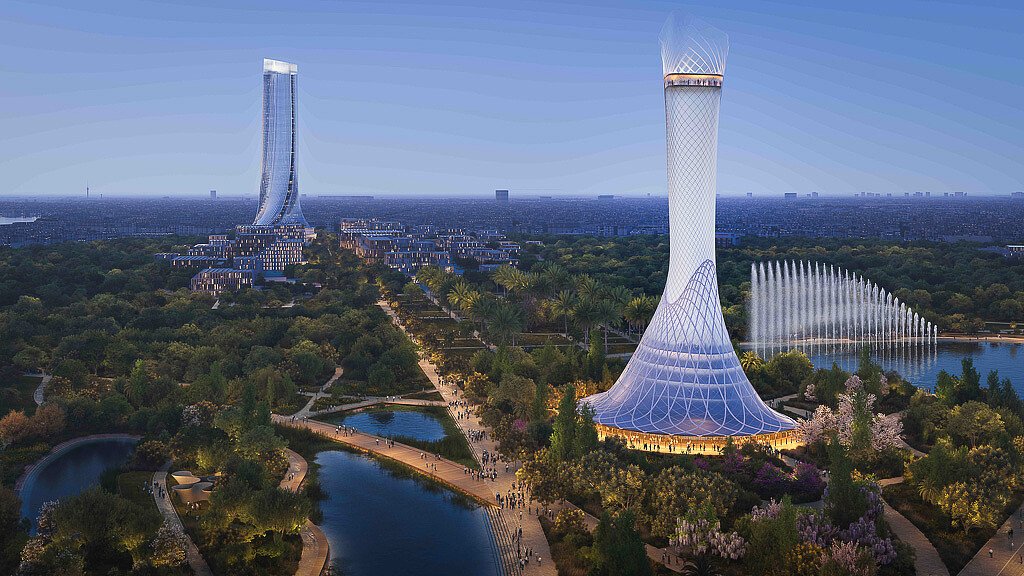
Iraq has entered a new municipal phase as the Baghdad Gardens project moves to the top of the agenda. Parliament confirmed Ammar Moussa as Mayor of Baghdad. Immediately after confirmation, city officials announced new development priorities. The Baghdad Gardens project now anchors the capital’s transformation strategy.
Municipal leaders plan to accelerate large-scale urban initiatives. Mohammed Al-Rubaie, Director of the Municipality’s Relations and Media Directorate, outlined the roadmap. He said the administration will focus on completing strategic projects. At the center stands the Baghdad Gardens project.
The initiative, also known as the Baghdad Forests project, will rise on the former Al-Rasheed Camp site. Officials aim to convert the area into a major green space. This transformation will expand environmental zones across the capital. Moreover, the plan supports long-term urban sustainabilit
In addition, city leaders introduced the Baghdad 2060 vision. This strategy expands the earlier 2030 development roadmap. Officials want to modernize infrastructure and public services. Therefore, planners align current projects with long-term urban goals.
Baghdad hosts more than eight million residents. Consequently, authorities must address population growth and infrastructure pressure. The Baghdad Gardens project aims to improve air quality and provide public recreation areas. Furthermore, leaders hope to reshape the city’s image through green development.
Meanwhile, officials continue the Baghdad More Beautiful 2 campaign. This program targets urban aesthetics and public spaces. Crews work to upgrade streets, parks, and service facilities. City managers believe these improvements will raise quality of life.
However, financial challenges remain. Contractors have organized protests over delayed payments. They demand settlement of outstanding dues. In response, the mayor has begun efforts to secure payments. Officials emphasize respect for contractors’ legal rights.
Budget delays have complicated municipal operations. The federal government has not yet approved the annual budget. As a result, authorities rely on the “1/12 rule.” This mechanism allows monthly spending based on last year’s allocations. Therefore, city departments can maintain essential services.
Al-Rubaie explained that interim funding supports project continuity. Officials aim to prevent construction delays. They also want to close service gaps across municipal departments. The Baghdad Gardens project will proceed under this temporary framework.
City planners view green infrastructure as essential for future growth. Large-scale environmental projects can reduce congestion and pollution. Moreover, they attract investment and tourism. For this reason, leaders place strong emphasis on sustainable expansion.
The confirmation of the new mayor marks a turning point for Baghdad. Authorities now push forward with coordinated planning. The Baghdad Gardens project symbolizes this renewed momentum. Officials pledge to continue development despite fiscal constraints.