

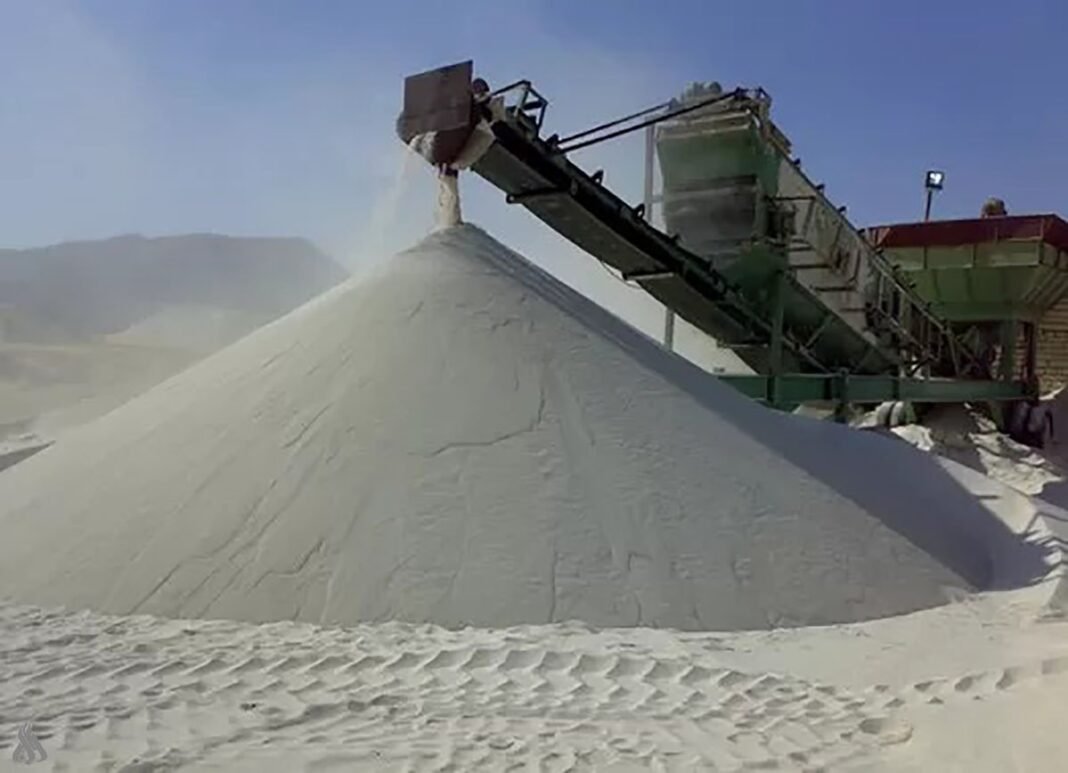
Iraq holds a major natural resource in the Anbar Desert that could transform its industrial future. First, geological experts confirmed the presence of vast high-quality silica sand reserves. Consequently, Iraq Anbar silica reserves could support advanced global industries. Therefore, the country gains a new opportunity beyond traditional resource sectors.
Experts explained that the Anbar Desert represents Iraq’s largest natural resource zone. Moreover, silica sand stands out as the most valuable material in this area. Specialists also call this material glass sand due to its industrial uses. As a result, Iraq Anbar silica reserves attract growing attention from investors and researchers.
Geological surveys estimate proven reserves at around six hundred million tons. Additionally, recent studies suggest the volume could approach one billion tons. Furthermore, purity levels range between ninety-eight and ninety-nine percent. Therefore, Iraq Anbar silica reserves meet the highest international quality standards.
High-purity silica plays a crucial role in modern industries. For example, manufacturers use it to produce silicon. Silicon production requires advanced smelting technologies and extremely high temperatures. Consequently, this process supports industries such as microchips and electronic semiconductors.
Iraq can benefit economically by entering these strategic industries. Moreover, Anbar Province could gain new jobs and infrastructure development. Therefore, silica investment supports regional growth and national diversification. In addition, Iraq can reduce reliance on oil-based revenue streams.
Local geology experts stressed the natural advantage of Anbar’s silica sand. Unlike many countries, Iraq does not need complex processing to reach high purity. As a result, production costs remain lower and more competitive. Consequently, Iraq strengthens its position in global supply chains.
Industry specialists also highlighted the global demand for semiconductor materials. Furthermore, technology markets continue to expand rapidly. Therefore, reliable silica sources gain strategic importance. Iraq Anbar silica reserves could meet part of this rising demand.
Investment in silica processing could also encourage technology transfer. Moreover, partnerships with international firms could follow. As a result, Iraq can build expertise in advanced manufacturing fields. Therefore, silica development supports long-term industrial growth.
Anbar Province offers geographic and logistical advantages for such projects. Additionally, large open desert areas allow scalable industrial zones. Consequently, planning and expansion remain flexible. This environment supports sustainable industrial development.
Overall, Iraq Anbar silica reserves represent a strategic national asset. They offer economic diversification, industrial growth, and global relevance. Therefore, Iraq stands at the edge of a new industrial chapter driven by natural resources beyond oil.