

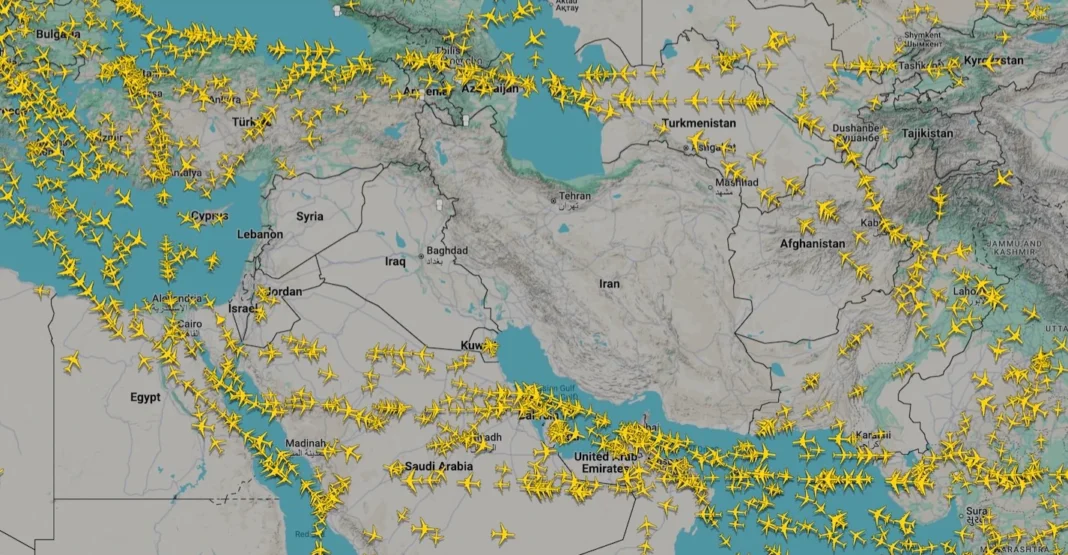
Iraq faces a growing Airspace Loss Crisis as flight suspensions cut daily revenue by $360,000. This Airspace Loss Crisis continues to impact the country’s aviation income and economic stability. As a result, officials monitor losses while regional tensions persist.
First, Iraq previously handled about 800 flights each day. These included both domestic and international routes. Earlier averages ranged between 700 and 750 daily flights. Therefore, airspace activity had shown steady growth before the shutdown.
Moreover, each aircraft paid around $450 in overflight fees. This structure generated roughly $360,000 in daily revenue. Over a month, this amount reached about $10.8 million. Consequently, the suspension now creates a significant financial gap.
In addition, the Airspace Loss Crisis began after authorities halted air traffic. The Ministry of Transport (Iraq) ordered the closure due to rising security threats. These threats included missile activity and drone operations across Iraqi skies. Therefore, safety concerns drove the decision.
Furthermore, escalating regional conflict continues to influence the situation. Tensions involving Iran and Israel have increased risks in the region. As a result, Iraqi airspace became unsafe for commercial overflights.
At the same time, attacks targeting facilities in Baghdad and the Kurdistan Region added pressure. Armed groups launched strikes against foreign-linked sites. Consequently, authorities prioritized security over economic activity.
Meanwhile, the Airspace Loss Crisis highlights Iraq’s reliance on transit aviation revenue. Overflight fees represent a steady income source. When flights stop, losses accumulate quickly. Therefore, prolonged closure could strain financial planning.
In contrast, airlines also adjust routes to avoid high-risk zones. Many carriers now bypass Iraqi airspace entirely. This shift reduces traffic even further. As a result, recovery may take time even after reopening.
Additionally, aviation disruptions affect related sectors. Airports, logistics services, and fuel providers all face reduced activity. These effects extend beyond direct revenue losses. Consequently, the broader economy feels the impact.
Overall, the Airspace Loss Crisis reflects the economic cost of regional instability. It shows how security challenges disrupt key revenue streams. As tensions continue, the Airspace Loss Crisis will remain a major concern for Iraq’s economy.