

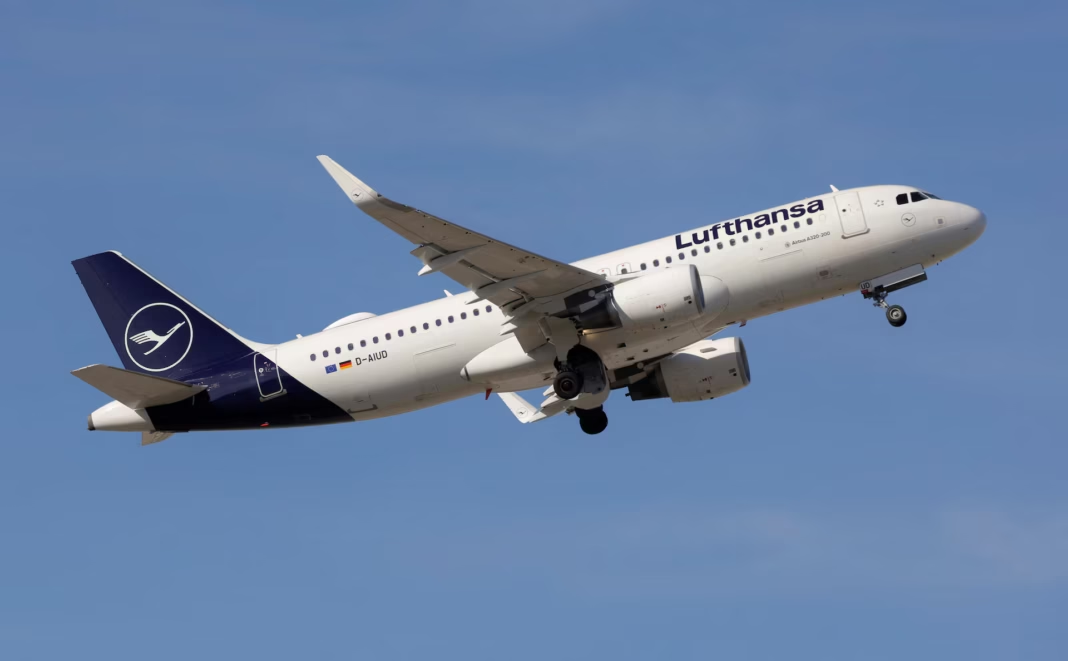
Germany’s Lufthansa has announced it will avoid Iraqi airspace amid rising tensions in the Middle East. The airline said safety concerns prompted the move. Lufthansa also plans to bypass Iranian airspace “until further notice,” following warnings from the United States.
The airline group includes Austrian Airlines, Brussels Airlines, Discover, Eurowings, Swiss, and ITA Airways. Officials emphasized that the decision is a precaution due to escalating regional risks. Lufthansa’s statement stressed that passenger safety remains the top priority.
This decision follows heightened tensions between the US and Iran. Military alerts and warnings have affected international aviation routes. Airlines worldwide are monitoring developments closely to avoid potential hazards.
Lufthansa’s competitors, such as IAG and Air France-KLM, have maintained operations in the region. However, Lufthansa has lost ground to these rivals in recent months regarding profitability. The Iraq airspace alert shows how geopolitical events can affect airline strategy and finances.
The airline said flight paths are adjusted to maintain schedules while ensuring safety. Pilots will follow revised routes that avoid Iraqi and Iranian skies. Lufthansa expects minimal delays despite longer travel distances.
Experts said this move could influence other airlines operating in the region. Some carriers may follow Lufthansa’s example if tensions escalate further. Airspace closures or rerouting increase operational costs and fuel consumption.
Passengers traveling to or from Iraq and nearby countries should check flight updates. Lufthansa encourages travelers to stay informed about itinerary changes. Airport officials in Baghdad and Erbil also monitor airline schedules closely.
The Iraq airspace alert highlights the impact of geopolitical risks on civil aviation. Airlines worldwide face challenges when conflicts or military tensions rise. Adjustments in routes, fuel costs, and flight safety protocols are immediate concerns for aviation companies.
Authorities stress that airspace restrictions are temporary and depend on evolving security situations. Lufthansa will continue to review Middle East developments before resuming regular flight paths. Officials said safety assessments guide all decisions.
Analysts noted that long-term disruptions could affect airline market share in the region. Companies that adapt quickly may protect their operations and customer trust. Meanwhile, passengers must remain flexible with travel plans during such periods.