

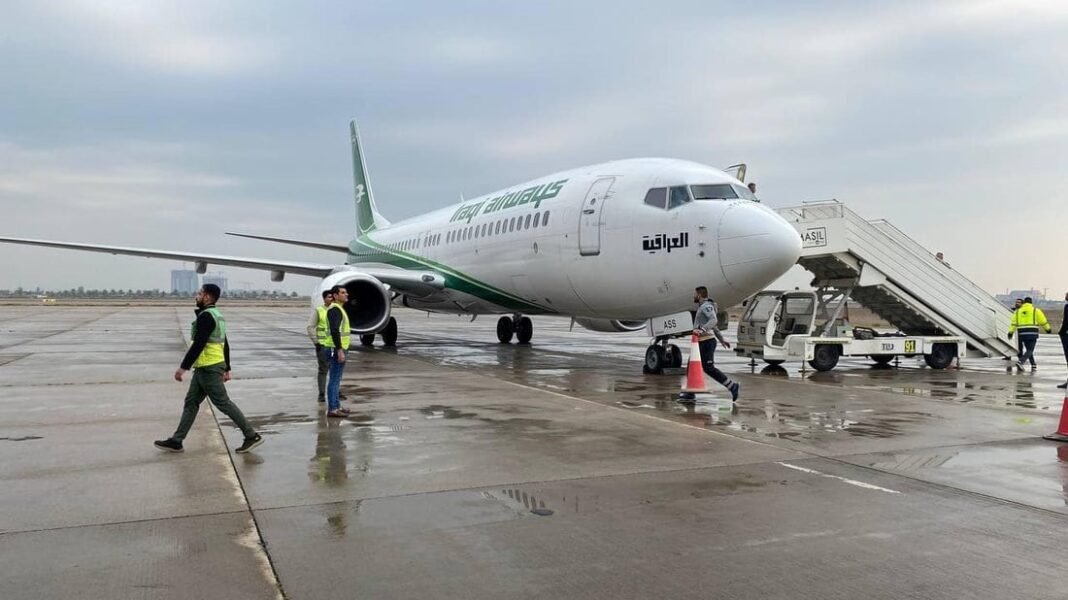
Iraq airspace closure continues after authorities extended restrictions for another 72 hours. Iraqi aviation officials confirmed the decision after reviewing regional security threats. As a result, the country will keep its skies closed to all flights.
The Iraqi Civil Aviation Authority announced the extension during an official briefing. The restriction blocks all arriving, departing, and transiting aircraft. Consequently, airlines must cancel or delay scheduled operations.
Authorities explained that the measure protects civilian aviation during regional tensions. Military escalation across the Middle East continues to raise security concerns. Therefore, officials decided to maintain strict aviation safety measures.
The Iraq airspace closure began after the military conflict expanded between the United States, Israeli forces, and Iran. Since then, aviation risks have increased across regional flight corridors. Missiles, drones, and military aircraft activity continue to threaten civil aviation routes.
Because of these developments, Iraqi authorities extended restrictions several times. The latest decision adds another 72 hours to the shutdown. Iraq airspace closure, therefore, remains one of the longest aviation suspensions in the region.
Major airports across the country have halted normal operations. Baghdad International Airport and Erbil International Airport both suspended commercial traffic. Passengers cannot depart or arrive through these airports during the restriction.
Meanwhile, the national carrier, Iraqi Airways, stopped all flights. The airline also converted existing reservations into travel credit for passengers. This measure helps travelers rebook when flights resume.
However, the shutdown also affects international airlines. Several global carriers canceled flights to Iraqi cities. Airlines, including Emirates, Qatar Airways, and Turkish Airlines, paused services temporarily.
Airlines cited two major reasons for cancellations. First, they lack safe navigation routes over Iraqi territory. Second, they worry about possible drone and missile threats in the region.
Therefore, airlines continue monitoring security conditions carefully. Many companies plan to review routes again before restarting operations. Until then, passengers must wait for official updates.
The Iraq airspace closure also affects regional aviation networks. Iraq normally sits on important international air routes. Flights traveling between Europe and Asia often cross Iraqi airspace.
Consequently, airlines must reroute aircraft through alternative corridors. These longer routes increase travel time and fuel costs. As a result, global aviation operations face additional pressure.
Furthermore, cargo shipments and business travel experience disruption. Companies depend on air transport to move goods and personnel quickly. However, the shutdown limits those activities temporarily.
Officials continue evaluating security developments closely. Military tensions across the Middle East still influence aviation safety decisions. Therefore, authorities prefer caution before reopening airspace.
For now, the Iraq airspace closure remains an important precaution. Aviation authorities want to ensure safe skies before restoring operations. Until conditions improve, airports and airlines will maintain suspension measures.