

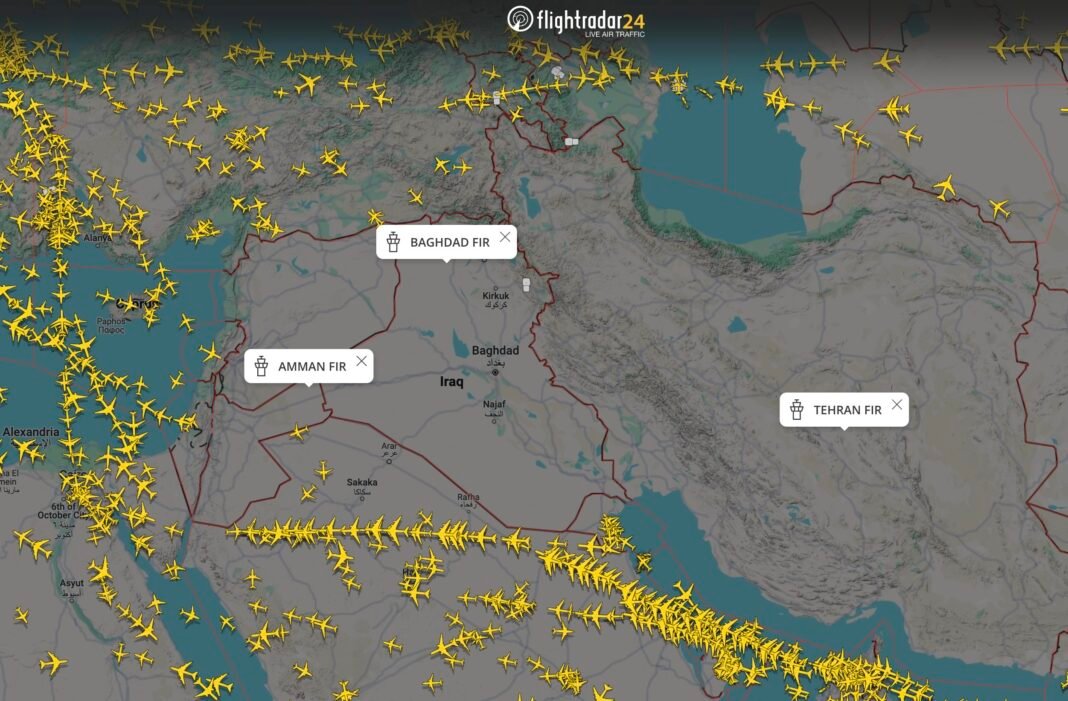
Iraq joined several nations that shut their skies as Middle East flight disruption intensified. The conflict grounded thousands of aircraft across global networks. Airlines scrambled to manage one of the worst crises since the pandemic.
Regional tensions escalated after the US and Israeli strikes targeted Iran. Soon after, Iran launched retaliatory missile and drone attacks. Consequently, governments across the region imposed urgent aviation restrictions.
Iraq closed its airspace completely to civilian flights. Iran and Israel also halted air traffic. Meanwhile, Kuwait, Qatar, the United Arab Emirates, and Syria announced partial or full restrictions. As a result, civilian aviation across the Middle East nearly stopped.
The Middle East flight disruption quickly affected major global hubs. Dubai International Airport, the busiest for international travel, faced severe interruptions. Doha’s airport also suspended many operations. Therefore, thousands of transit passengers became stranded.
Flight tracking data showed more than 6,700 delayed flights worldwide. In addition, authorities recorded around 1,900 cancellations within hours. These numbers added to thousands of disruptions from the previous day.
Major airlines reacted immediately. Emirates and Etihad cancelled large portions of their schedules. Qatar Airways suspended all departures from Doha. EgyptAir halted flights to several Middle Eastern cities, including Baghdad and Dubai.
European carriers followed similar steps. Lufthansa cancelled services to Tel Aviv, Beirut, Amman, Erbil, and Tehran. Air France, British Airways, and Turkish Airlines also stopped multiple routes. Consequently, European travelers faced sudden itinerary changes.
North American airlines adjusted operations as well. Delta Air Lines suspended New York–Tel Aviv flights. American Airlines paused Doha–Philadelphia routes. United Airlines cancelled services to Tel Aviv and Dubai.
Asian carriers joined the wave of cancellations. Air India and IndiGo suspended all Middle East destinations. Cathay Pacific halted Dubai and Riyadh routes. Singapore Airlines and Scoot canceled regional services temporarily.
African airlines also reacted to the growing crisis. Ethiopian Airlines stopped flights to Amman and Tel Aviv. Kenya Airways suspended services to Dubai and Sharjah. Therefore, the Middle East flight disruption extended far beyond regional borders.
Aviation analysts described this crisis as the biggest shock since Covid-era lockdowns. Modern flight paths depend heavily on Middle Eastern corridors. When countries close their skies, global networks suffer immediate consequences.
Insurance costs for airlines increased sharply. Carriers must reroute aircraft along longer paths. As a result, fuel expenses rise and operational efficiency drops.
Iraq plays a strategic role in regional aviation routes. Therefore, its airspace closure adds further strain to east-west travel corridors. Airlines now divert aircraft north or south to avoid restricted zones.
The Middle East flight disruption highlights how quickly conflict reshapes civil aviation. Governments prioritize national security over commercial travel. However, prolonged closures could hurt tourism and trade.
For now, airlines continue schedule revisions and passenger advisories. Authorities review security developments before reopening airspace. Until tensions ease, Middle East flight disruption will continue to impact travelers worldwide.