

Iraq raised alarm over Hormuz oil risk after high-level talks with Saudi Arabia. Iraqi leaders fear serious economic damage if tensions block key maritime routes. The warning highlights Iraq’s deep reliance on energy exports.
Foreign Minister Fuad Hussein spoke with Saudi Foreign Minister Faisal bin Farhan Al Saud about the rising regional conflict. During the discussion, both sides reviewed military developments and cross-border attacks. They stressed the urgent need to prevent wider escalation.
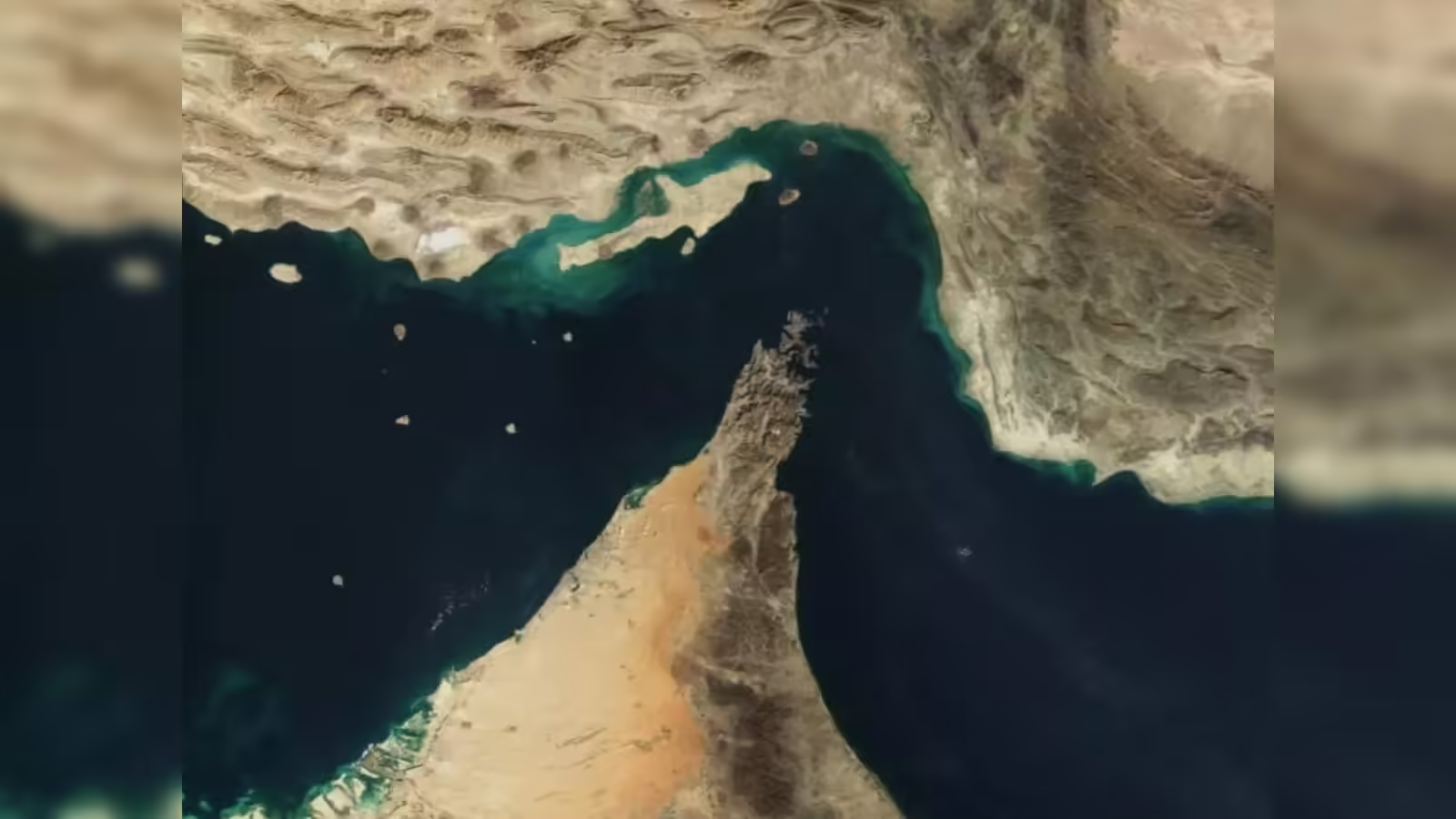
Iraq linked its concerns directly to the Strait of Hormuz. Officials warned that any disruption in that corridor would trigger severe financial strain. Iraq depends heavily on oil exports to fund public salaries and government spending.
Currently, Iraq ships about 3.5 million barrels per day through the Strait of Hormuz. That figure represents the backbone of national revenue. Therefore, even a short interruption could shake fiscal stability.
In contrast, the Iraq-Türkiye pipeline provides a much smaller alternative route. The pipeline carries around 200,000 barrels per day from the Kurdistan Region to Ceyhan. Consequently, it cannot replace Gulf export volumes.
Iraq emphasized that the Hormuz oil risk threatens more than shipping lanes. Leaders fear that broader conflict between the United States, Israel, and Iran could drag additional countries into confrontation. As a result, Baghdad called for diplomatic efforts to contain violence.
Moreover, Iraq warned that the Hormuz oil risk could push global oil prices higher. Energy markets react quickly to instability in the Gulf. Therefore, traders monitor every military move in the region.
The Strait of Hormuz handles a large share of the world’s crude shipments. Any closure would disrupt not only Iraq but also Gulf producers. For that reason, Iraq urged regional powers to avoid further escalation.
Baghdad leaders continue diplomatic outreach to prevent economic fallout. They seek dialogue instead of confrontation. At the same time, officials evaluate contingency plans to protect state revenues.
Iraq faces mounting budget pressure if the Hormuz oil risk turns into reality. Oil income funds infrastructure, social programs, and salaries. Without steady exports, the government would struggle to meet obligations.
Furthermore, investors watch Iraq’s stability closely. Prolonged uncertainty could reduce foreign investment in energy projects. Therefore, Iraqi officials promote calm and regional cooperation.
Iraq repeated that Hormuz oil risk requires immediate international attention. Leaders believe diplomacy offers the only path to stability. They continue to coordinate with neighboring states to prevent further disruption.
For now, Iraq monitors maritime security while urging restraint from all sides. However, the country’s economy remains tightly linked to safe passage through the Gulf.