

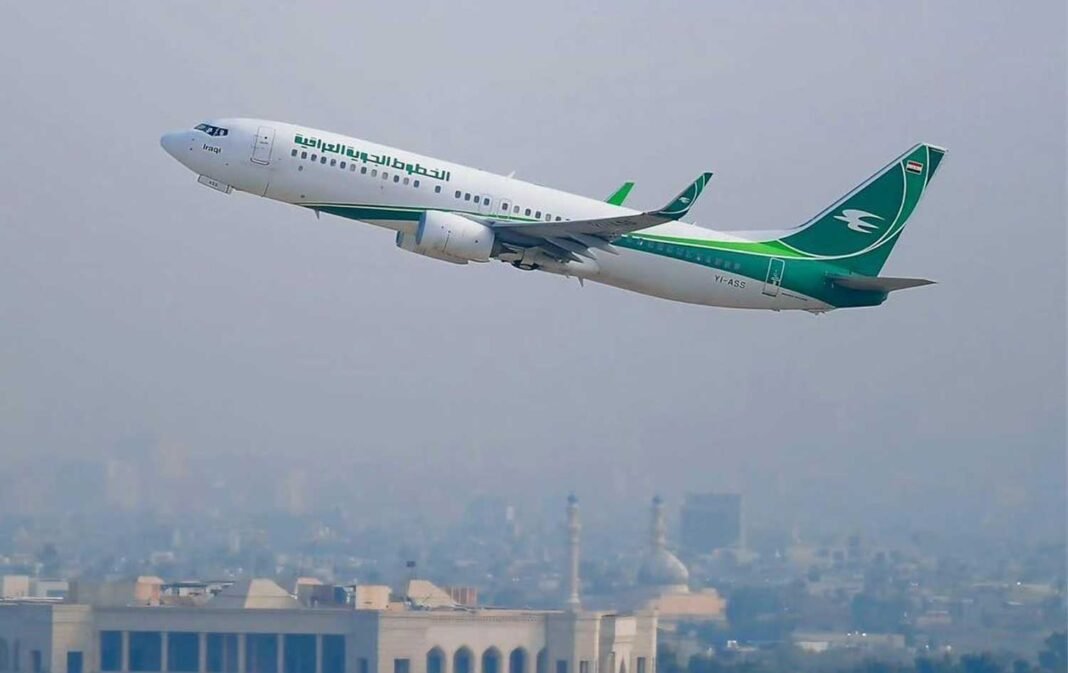
Iraq announced a 24-hour extension as the airspace closure continues amid rising regional tensions. Authorities halted all civilian flights again to protect national security. The move follows ongoing military escalation across the Middle East.
The Iraqi Civil Aviation Authority confirmed the decision in an official statement. Officials suspended all arriving, departing, and overflying aircraft. They set the extension to last until 12:00 p.m. (0900 GMT) on Monday.
Leaders described the measure as temporary and precautionary. However, the Iraq airspace closure continues because security risks remain high. Authorities said they will reassess conditions before reopening the skies.
Regional conflict triggered the disruption. The United States and Israel carried out coordinated strikes on Iranian facilities. Soon after, Iran launched missile and drone responses across the Gulf areas. As a result, several countries tightened airspace controls.
Flight monitoring platforms showed nearly empty skies over Iraq and nearby states. Airspace restrictions appeared across Iran, Kuwait, Bahrain, Qatar, and the United Arab Emirates. Consequently, airlines canceled and diverted many routes.
The Iraq airspace closure continues to affect thousands of travelers. Airlines adjusted schedules quickly to avoid risk zones. Many passengers now face delays and sudden itinerary changes.
Moreover, aviation experts warn that prolonged restrictions could raise operational costs. Airlines must reroute planes along longer corridors. Therefore, fuel use increases and ticket prices may climb.
Iraq airspace closure continues as authorities prioritize safety over convenience. Officials stressed that passenger protection guides every decision. They also maintain coordination with regional aviation bodies.
Airports across Iraq operate with limited services during the suspension. Ground crews remain on standby while airlines update passengers. Meanwhile, travelers check with carriers for the latest flight information.
The extended shutdown shows how deeply conflict impacts civil aviation. Modern air routes connect multiple regions through Middle Eastern corridors. Therefore, instability in one country disrupts global networks.
Officials have not provided a reopening date. They plan to evaluate threats based on security developments. Military activity will determine the next step.
Business travel and tourism sectors also feel pressure. Companies delay meetings and shipments. Families postpone trips until conditions improve.
Iraq airspace closure continues, and uncertainty surrounds future flight operations. Authorities promise transparent updates once risks decline. For now, security considerations drive all aviation policies.