

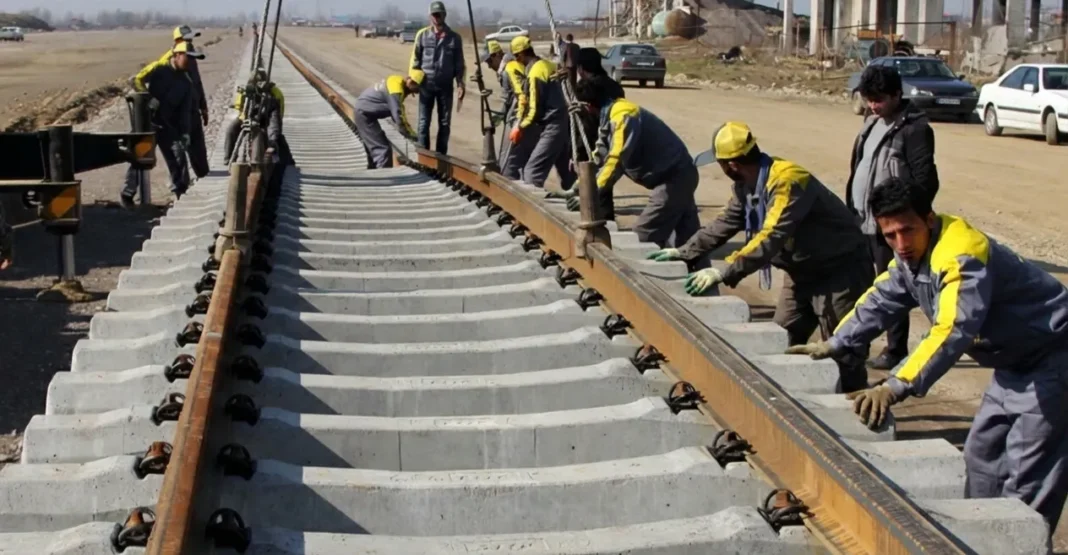
Iran has accelerated work on a 263-kilometer railway linking Kermanshah to the Iraqi border, aiming to strengthen the east–west trade corridor. The project supports faster cargo movement and deeper regional integration. Moreover, officials say the railway will reshape cross-border logistics between the two neighbors.
Mohammad Jafar Ghaem Panah, Presidential Assistant for Executive Affairs, confirmed that Iran plans to complete the Kermanshah–Khosravi railway soon. He stressed that the railway will create an active international route connecting eastern and western markets. In addition, he highlighted the project’s strategic role in boosting bilateral commerce.
The 263 km railway stretches from Kermanshah in western Iran to the Khosravi border crossing. Authorities designed the line to enhance transport capacity and speed up freight flows. As a result, businesses will move goods more efficiently across borders.
At the same time, Iraq continues construction on its own railway network. Iraqi authorities are building a line from Baghdad to Khanaqin. That route will extend toward the Khosravi crossing. Consequently, both countries will connect their rail systems directly.
This parallel development strengthens the east–west trade corridor across the region. It allows cargo to travel from northwestern Iran into Iraq with fewer delays. Furthermore, neighboring countries can use this route to access Iraqi markets more easily.
Officials expect the railway to expand freight capacity significantly. Companies will transport goods faster and at lower costs. Therefore, traders will benefit from improved efficiency and reduced transit time.
The project also supports economic growth in Iran’s Kermanshah province. Local industries will gain better access to Iraqi consumers. In addition, logistics companies will create new jobs in border areas.
Iran approved the railway during a high-level provincial visit in 2012. Since then, planners have worked to turn the proposal into a key infrastructure link. Now, authorities describe it as one of the most important projects in western Iran.
Once completed, the railway will reinforce transport infrastructure between Iran and Iraq. It will also anchor the east–west trade corridor as a strategic regional route. Moreover, it will connect markets across Asia and the Middle East more directly.
Regional observers believe the railway could transform trade patterns. Strong rail connectivity encourages investment and industrial growth. Therefore, both governments see the project as a long-term economic driver.
As construction advances, the east–west trade corridor gains momentum. The 263 km railway stands at the center of that vision. If both sides maintain coordination, the corridor will unlock broader regional opportunities.