

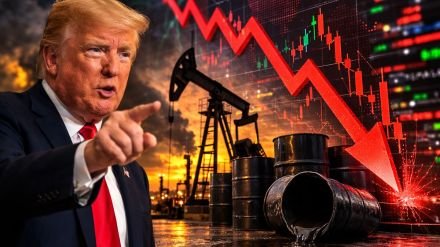
The global oil price drop appeared in energy markets after comments from U.S. President Donald Trump suggested the Middle East war could end soon. Investors reacted quickly, and oil prices fell after reaching their highest level in more than three years.
First, crude markets showed strong declines during early trading. Brent crude futures fell $4.17, which equals a 4.2% decrease, bringing the price to $94.79 per barrel.
Meanwhile, U.S. West Texas Intermediate crude also declined sharply. WTI dropped $3.81, representing a 4% fall, reaching $90.96 per barrel.
Earlier in the session, both benchmark contracts experienced even larger swings. At one point, prices dropped by as much as 11% before recovering part of the losses.
The global oil price drop followed strong gains from the previous trading day. Oil prices surged above $100 per barrel, reaching the highest level since mid-2022.
That sharp rise occurred because traders feared supply disruptions. The expanding regional conflict increased concerns about energy routes and production levels.
Additionally, earlier supply cuts from major producers strengthened those fears. Saudi Arabia and several oil-producing partners had already reduced production levels.
Consequently, traders worried that the war could disrupt global oil flows. Those concerns pushed prices higher at the start of the week.
However, markets changed direction after new political signals emerged. Trump stated in a television interview that the war could end sooner than expected.
He explained that the conflict might finish faster than his earlier estimate of four to five weeks. These comments immediately influenced investor expectations.
As a result, traders reduced the risk premium previously added to oil prices. The global oil price drop reflected growing optimism about supply stability.
Meanwhile, diplomatic discussions also affected market sentiment. Russian President Vladimir Putin reportedly spoke with Trump about proposals aimed at ending the conflict quickly.
These developments reassured investors who feared long-term supply disruptions. Therefore, oil prices moved downward as panic buying faded.
Energy analysts noted that market reactions moved rapidly in both directions. Some experts believe traders may have exaggerated price movements.
According to analysts, markets may have overreacted when prices surged earlier. Likewise, some experts say the current decline may also be excessive.
Despite the drop, several Middle Eastern oil benchmarks remain high. Certain grades from the region still trade above $100 per barrel.
Therefore, analysts say the underlying supply risks still exist. Regional instability continues to create uncertainty for global energy markets.
At the same time, Iran issued warnings regarding oil exports. Officials stated they could restrict regional shipments if attacks continue.
Such statements remind traders that geopolitical risks remain significant. Therefore, the oil market may continue experiencing strong volatility.
Furthermore, new policy discussions in Washington also influence market expectations. The U.S. government is considering several steps to ease rising oil prices.
These options include relaxing sanctions on Russian oil exports. Officials also discuss releasing crude from emergency strategic reserves.
If implemented, these measures could increase supply in global markets. Consequently, traders believe oil barrels will continue reaching international buyers.
Once investors recognized that supply routes might remain open, market panic quickly eased. As a result, oil prices retreated from their recent highs.