

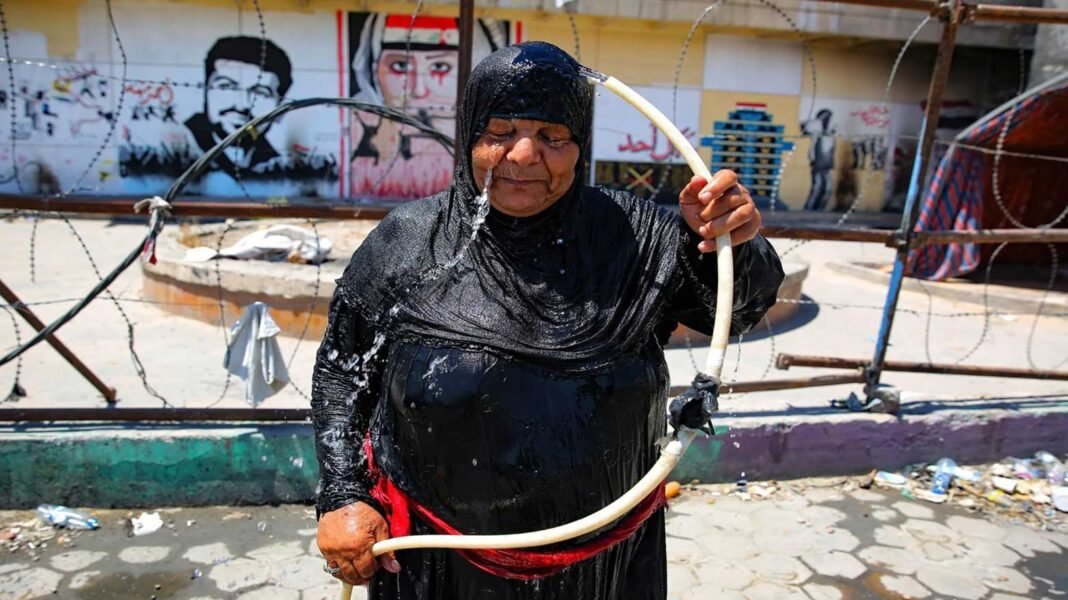
Extreme Heat in Iraq, Iraq continues to struggle with a powerful heatwave sweeping across the country. The government responded by declaring an official holiday in seven southern provinces. Authorities urged residents to stay indoors unless leaving was absolutely necessary.
The extreme heat has affected the provinces of Basra, Dhi Qar, Maysan, Karbala, Diwaniyah, Babylon, and Wasit. Officials took this step to protect civilians from dangerous conditions. The measure also helps safeguard public workers from serious heat-related illnesses.
Despite the holiday, essential services continue without interruption. So hospitals, power facilities, and city services remain active. These sectors provide necessary help to people who depend on electricity, medical care, and clean water.
The extreme heat in Iraq has become more dangerous than usual this year. Local weather experts described the temperatures as some of the highest in memory. Some areas experienced heat nearing 50 degrees Celsius.
Many people are now calling this period one of the hottest summers in Iraq’s history. Meteorologists warned everyone to avoid staying in direct sunlight. Without shade or water, people could experience heatstroke, dehydration, or other health issues.
The extreme heat in Iraq affects daily life. Roads appear almost empty in some cities. Shops close early to avoid the worst afternoon heat. Parents keep children indoors, while outdoor workers seek shelter during the hottest hours.
As climate change worsens, Iraq becomes one of the most affected nations in the region. Each summer, the temperatures in Iraq increase, especially in southern areas. Iraq often ranks among the hottest countries in the Middle East.
This year’s heatwave highlights the urgent need for action. Many cities in Iraq lack enough green spaces or cooling systems. Without solutions, the heat could continue to harm public health, agriculture, and water supplies.
The repeated phrase extreme heat in Iraq remains a central concern for both citizens and officials. As well as, governments may need long-term plans to manage future waves of extreme heat in Iraq.
The country will likely face more extreme heat in Iraq as climate trends continue. Policymakers, scientists, and communities must work together for solutions.