

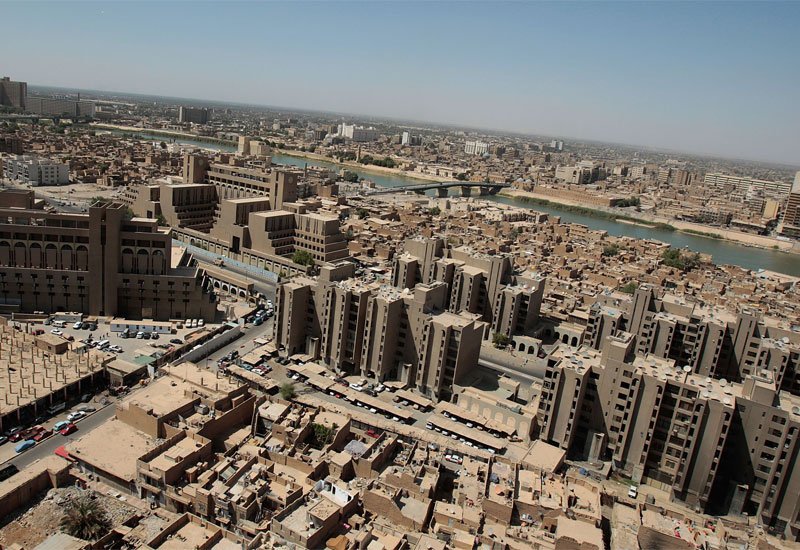
The Iraq housing crisis continues despite a new government initiative to distribute one million residential land plots. Officials hope the plan will reduce the country’s long-standing housing shortage. However, economists and policy experts argue that Iraq must address institutional weaknesses before any housing strategy can deliver lasting results.
Iraq currently needs around five million additional homes to meet growing demand. Over the past two decades, several governments introduced housing programs with similar goals. Yet the shortage has remained largely unchanged. Experts believe poor implementation, rather than a lack of plans, explains the continuing crisis.
The Ministry of Construction, Housing and Municipalities estimates that nearly four million people live in informal settlements. Most of these communities exist in Baghdad. Residents often lack reliable electricity, sewage systems, schools, and other essential public services. Rapid population growth has also increased pressure on the housing market.
Iraq’s population now exceeds 46 million people. Every year, hundreds of thousands of new families seek affordable homes. Meanwhile, housing construction has failed to match rising demand. This widening gap has made home ownership increasingly difficult for many Iraqi citizens.
Prime Minister Ali al-Zaidi recently launched a nationwide program to distribute one million residential land plots. The initiative allows citizens to receive land and build their own homes. Officials describe the project as one of Iraq’s largest housing programs in recent years. They hope it will encourage construction across the country.
At the same time, the National Investment Commission temporarily suspended approvals for new residential investment projects. Acting Commission Chairman Haidar Mohammed ordered a comprehensive review of existing and planned developments. Authorities also requested updated records from investment projects before granting further approvals. The review aims to improve oversight and ensure better project management.
Economic experts argue that Iraq’s challenges extend beyond construction. Economist Karim al-Hilu believes weak enforcement of land laws remains the central issue. Illegal occupation of public land increased significantly after 2003. Political influence and inconsistent regulation allowed many violations to continue without effective action.
Experts also say affordable housing projects often failed to reach the families they intended to serve. Some developments allegedly benefited corrupt investors and money laundering networks instead of low-income citizens. As a result, many vulnerable families remained without suitable housing. These problems weakened public confidence in government housing programs.
Former Ministry of Planning spokesman Abdul Zahra al-Hindawi noted that housing remains a key part of Iraq’s 2024–2028 development strategy. Government agencies now use statistical databases and geographic mapping to monitor urban growth. These tools help officials identify informal settlements and future housing needs. Nevertheless, urban expansion continues to outpace government capacity.
Officials within the Housing Ministry also report that more than 1,600 development projects remain stalled across Iraq. Many unfinished residential complexes have remained inactive for years. Researchers link these delays to poor planning, administrative obstacles, and politically influenced contracting. Such setbacks have discouraged both investors and homebuyers.
Members of parliament also point to financial pressures and bureaucratic delays as major obstacles. Previous budget decisions halted many housing projects and slowed new investments. Although the current initiative offers renewed hope, experts believe successful implementation will require stronger institutions, transparent oversight, and reliable financing. Without those reforms, the Iraq housing crisis may continue despite ambitious government plans. Many analysts agree that solving the Iraq housing crisis will depend on consistent policy execution rather than new announcements alone.