

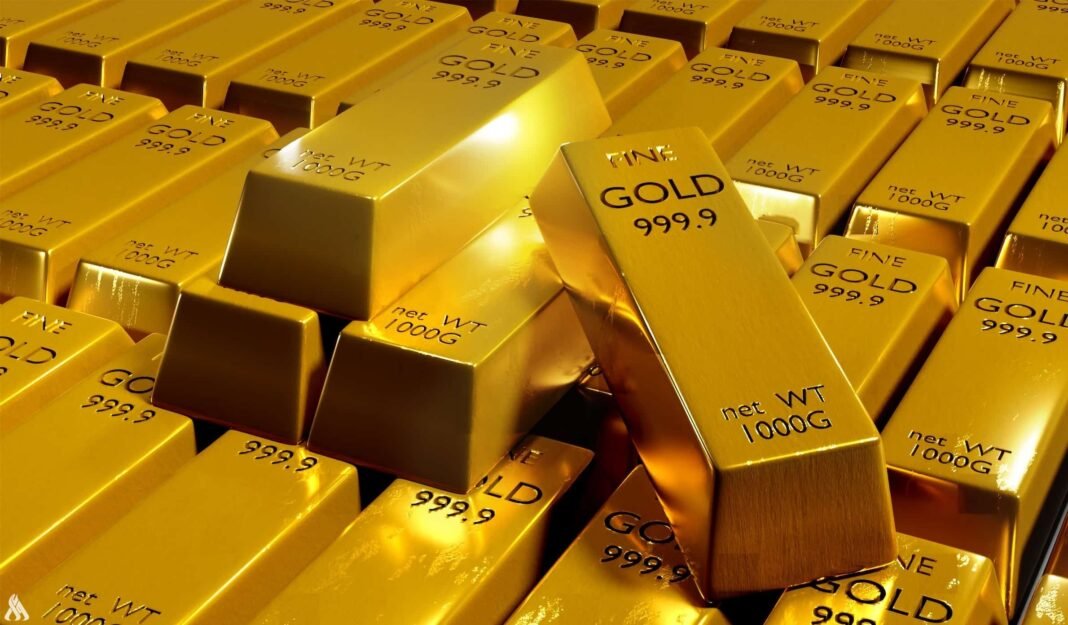
Global investors closely watched Gold prices today as markets balanced rising geopolitical tensions with expectations of higher U.S. interest rates. Fresh American military strikes against Iran pushed oil prices and the U.S. dollar higher. At the same time, traders prepared for the release of the Federal Reserve’s latest policy meeting minutes. These competing forces created uncertainty across financial markets.
Spot gold increased 0.5 percent to $4,125.59 per ounce during early trading. Earlier in the session, the precious metal touched its lowest level since July 2 before recovering. Meanwhile, U.S. gold futures for August delivery slipped 0.5 percent to $4,136.30 per ounce. The mixed performance reflected changing investor sentiment throughout the trading day.
Market analysts said inflation concerns returned after the latest developments in the Middle East. Rising oil prices increased expectations that inflation could remain elevated for longer. As a result, investors moved toward the U.S. dollar while Treasury yields also climbed. Those market shifts limited gold’s upward momentum despite renewed demand for safe-haven assets.
Financial experts noted that gold experienced a short-term correction before showing signs of stability. Investors continue searching for signals that could determine the next direction for precious metals. Many traders believe gold may establish a stronger price floor if global uncertainty continues. However, stronger economic data could challenge that outlook.
The latest geopolitical tensions added another layer of uncertainty to global markets. The United States launched new airstrikes against Iranian targets after attacks on commercial vessels near the Strait of Hormuz. Washington also revoked a license that had allowed Iranian crude oil sales. These actions increased concerns about energy supplies and regional stability.
Oil prices responded quickly to the developments by rising nearly three percent in early trading. Higher energy prices often raise inflation expectations because they increase transportation and production costs. Consequently, investors adjusted their forecasts for future monetary policy. Those expectations also supported gains in the U.S. dollar.
Markets now expect a greater chance that the Federal Reserve could raise interest rates in September. Investor confidence in another rate increase climbed above 63 percent, compared with around 57 percent a day earlier. Higher borrowing costs usually reduce the appeal of gold because the metal does not generate interest income. Therefore, rising rate expectations remain an important challenge for gold prices.
Investors also focused on the upcoming release of the Federal Reserve’s June policy meeting minutes. The document may provide additional insight into future interest rate decisions. Traders hope policymakers will offer clearer guidance about inflation and economic conditions. Any change in expectations could influence precious metal prices in the coming days.
Other precious metals recorded mixed performances during the session. Silver advanced 0.8 percent to $60.47 per ounce. Platinum slipped 0.3 percent, while palladium lost 0.6 percent. These movements reflected broader caution across commodity markets.
Looking ahead, investors will continue monitoring geopolitical developments and central bank policy decisions. Any escalation in regional tensions could increase demand for safe-haven investments. Meanwhile, stronger signals of higher interest rates may place additional pressure on bullion prices. For now, Gold prices today remain highly sensitive to both global politics and economic policy, making Gold prices today a key indicator for financial markets.