

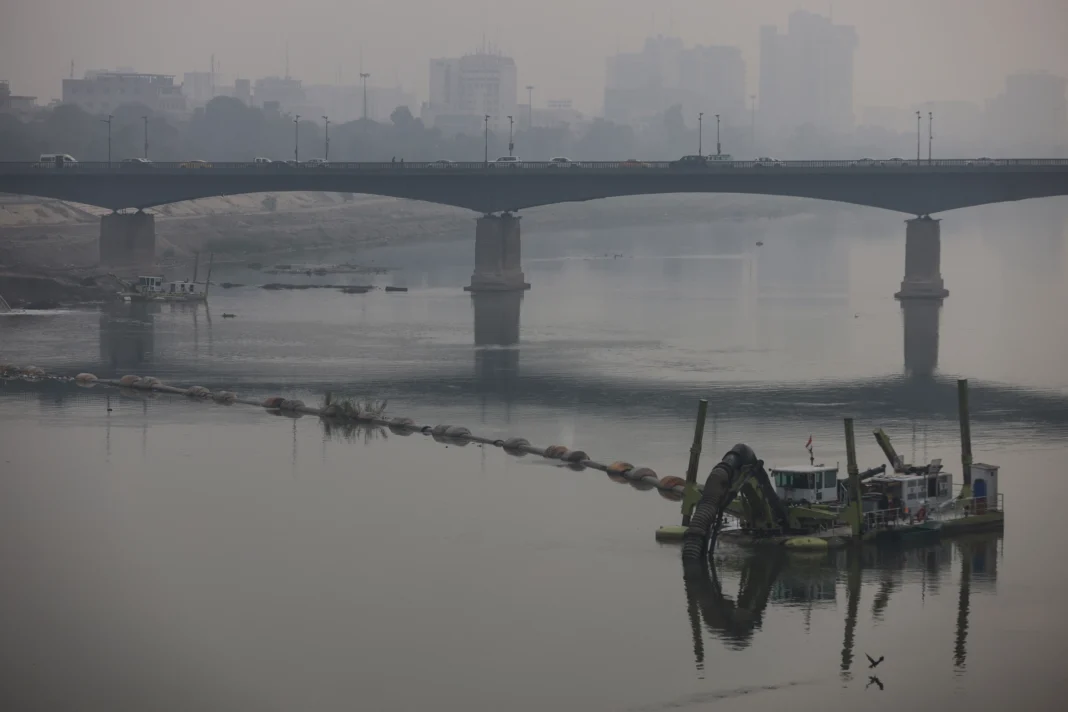
The Iraqi government launched a new environmental campaign on Sunday to address rising pollution levels in the capital. Officials described the Baghdad pollution plan as a major step toward improving air quality and reducing harmful industrial emissions across the city.
The Ministry of Environment announced that the strategy relies on three main pillars focused on monitoring, enforcement, and environmental protection. Authorities said the initiative comes after growing public concern about pollution and health risks linked to unregulated industrial activities.
Sinan Jaafar, Director General of Environmental Protection in the Central Region, confirmed that joint inspection teams have already begun field operations in several areas of Baghdad. Environmental authorities worked alongside the Baghdad Operations Command to identify illegal industrial sites and shut down facilities violating environmental regulations.
Officials stated that authorities closed more than 22 illegal metal smelting locations in Baghdad’s Rusafa district. As well as, Investigators identified those facilities as major sources of toxic emissions and dangerous odors affecting nearby residential neighborhoods.
The Baghdad pollution plan also includes broader inspections targeting unauthorized factories and industrial workshops. However, A specialized ministerial committee continues reviewing industrial operations to ensure businesses comply with national environmental standards and licensing requirements.
Environmental officials stressed that illegal smelting activities create serious risks for public health. In addition, Harmful gases released from those operations can contribute to respiratory illnesses and long-term environmental damage. Authorities believe stricter enforcement measures can help prevent worsening air pollution problems in densely populated areas.
The Ministry of Environment said cooperation between government institutions remains essential for the success of the campaign. Security forces, environmental inspectors, and local authorities continue coordinating efforts to monitor violations and remove illegal pollution sources from the capital.
Officials also warned that businesses violating environmental laws could face legal penalties and closure orders. Inspection teams plan to continue regular monitoring campaigns throughout Baghdad to prevent industrial facilities from operating outside legal regulations.
The Baghdad pollution plan reflects Iraq’s broader effort to strengthen environmental protection policies and improve public health conditions. Government agencies increasingly focus on reducing pollution as urban populations continue growing and industrial activities expand across major cities.
Environmental experts welcomed the latest measures but emphasized the need for long-term reforms and stronger environmental oversight. Analysts believe continued monitoring, public awareness campaigns, and investment in cleaner industrial technologies will remain important for achieving lasting improvements in Baghdad’s air quality.