

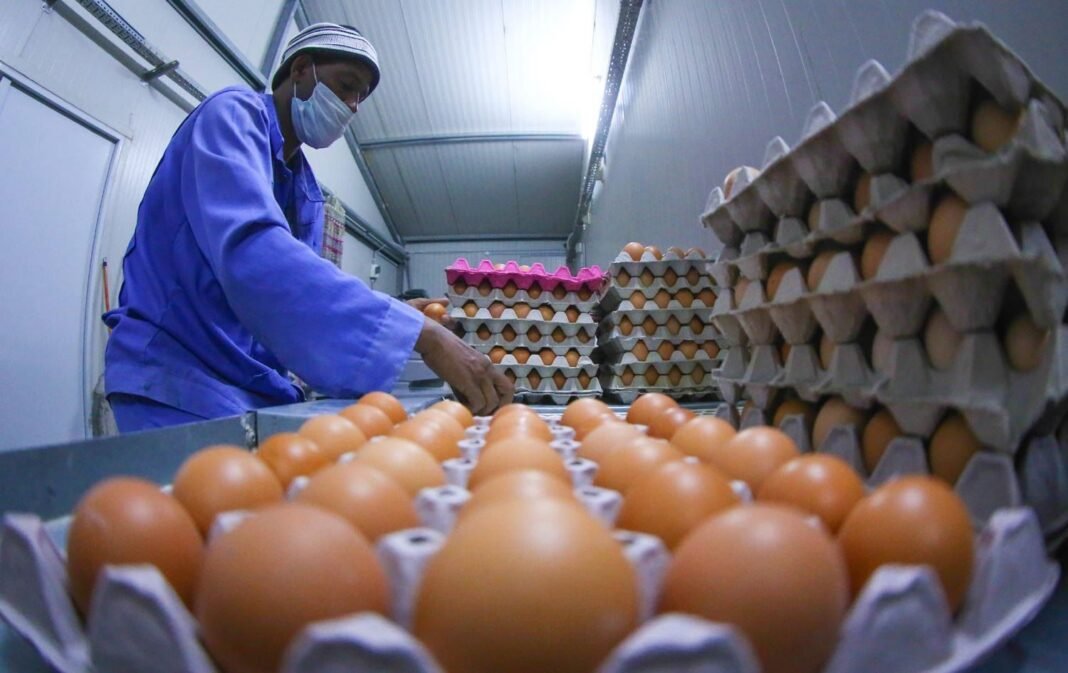
Iraq egg prices rise to 80000 dinars as supply costs increase across the poultry sector. Iraqi egg prices rise to 80000 dinars due to feed inflation and transport pressure. Moreover, Iraqi egg prices have risen to 80000 dinars and reflect wider market instability.
In Iraq, egg prices increased sharply in local markets. A carton now costs around 80,000 Iraqi dinars, equal to about 61 dollars. This rise affects household food spending across the country.
Experts linked the increase to disruptions in the Strait of Hormuz. This waterway plays a key role in global trade and imports. Therefore, any disruption quickly raises supply costs.
According to Eco Iraq Observatory, feed costs increased significantly. This change directly raised poultry production expenses.
First, soybean meal prices rose from 550,000 dinars per ton to 700,000 dinars per ton. This ingredient forms a major part of chicken feed. As a result, farmers now face higher production costs.
Next, premix costs also increased sharply. Prices climbed from 1.5 million dinars per ton to 2 million dinars per ton. This product provides essential nutrients for poultry growth.
Meanwhile, official egg prices remain lower than market prices. Authorities set official prices between 60,000 and 65,000 dinars per carton. However, traders sell eggs at around 80,000 dinars.
Observers say some traders exploit the situation. They ignore official pricing rules and increase prices. Therefore, consumers face higher costs in daily markets.
In addition, the observatory called for government action. It recommended temporary egg imports to reduce prices. This step could help stabilize supply and lower costs.
Furthermore, Iraq previously achieved record egg production levels. Output reached around 7 billion eggs in a single year. At that time, the country also exported eggs to Gulf markets.
Now, market pressure threatens local stability. Rising feed costs continue to affect farmers and consumers. Therefore, the situation requires urgent attention.
In conclusion, Iraqi egg prices rose to 80000 dinars due to supply chain disruptions. Higher feed costs and trade challenges continue to push prices upward.