

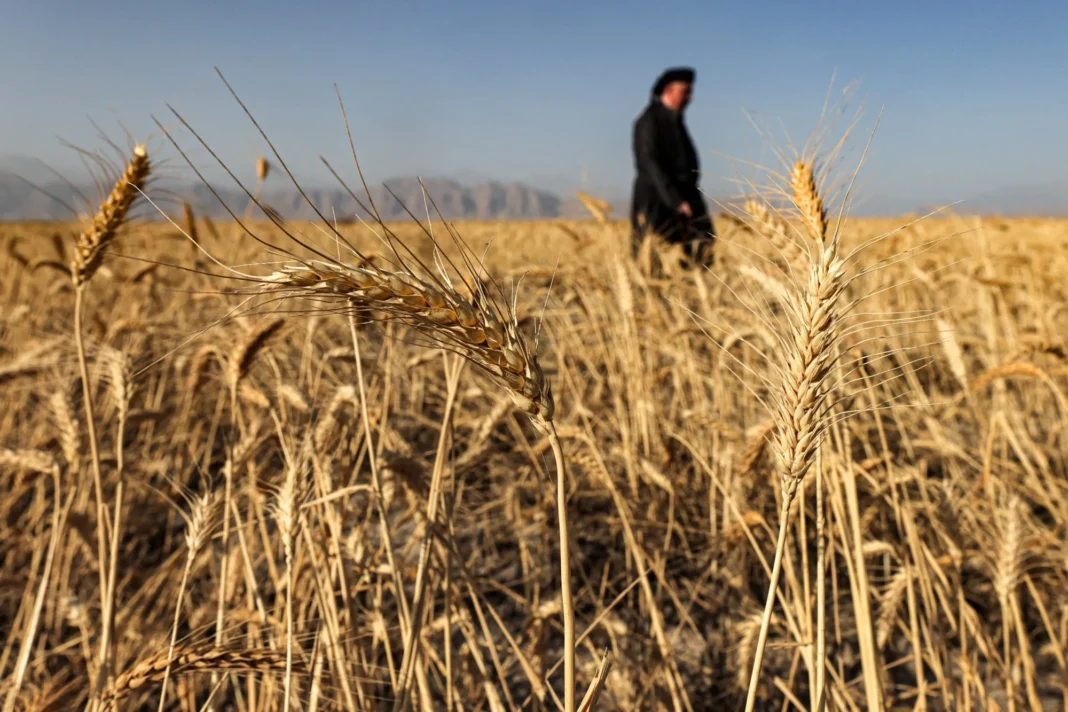
Basra – Iraq strengthens food supply as Iraq’s wheat intake rises in the southern province of Basra. Officials expect total wheat intake to exceed 24,000 tons this season. As a result, authorities have launched organized marketing operations to manage the flow efficiently.
Local officials confirmed that receiving centers now operate at full readiness. These centers provide enough silo capacity and structured systems for truck movement. Therefore, farmers can deliver crops without delays. Hadi Hussein, head of the Basra Agriculture Directorate, urged farmers to follow delivery schedules closely. This step ensures faster unloading and smooth processing.
Meanwhile, Iraq’s wheat intake rises as harvesting expands across Basra. Farmers started harvesting recently, with average yields reaching 750 kilograms per dunam. The cultivated area includes 3,937 dunams under the official agricultural plan. In addition, farmers planted about 7,500 dunams outside the plan. This expansion boosts overall production levels.
Moreover, peak wheat deliveries will occur soon and continue for several weeks. Authorities expect heavy inflows during this period. Therefore, coordination between farmers and receiving centers remains essential.
In northern Iraq, Kirkuk shows a strong production performance. Officials project wheat output there at around 600,000 tons this season. Average yields reach 1,250 kilograms per dunam, which reflects improved farming methods. Farmers also benefit from technical support and favorable weather conditions.
At the national level, Iraq expects total wheat production to reach 5 million tons this year. However, this figure shows a decline from 6.3 million tons last year. Therefore, the country plans to increase wheat imports to about 2.1 million tons. This strategy helps maintain food stability despite lower output.
Furthermore, Iraq’s wheat intake rises in Basra, highlighting efforts to secure domestic supply chains. Strong coordination, better infrastructure, and expanded farming areas all contribute to this progress. As a result, Iraq moves closer to balancing local production with market demand.