

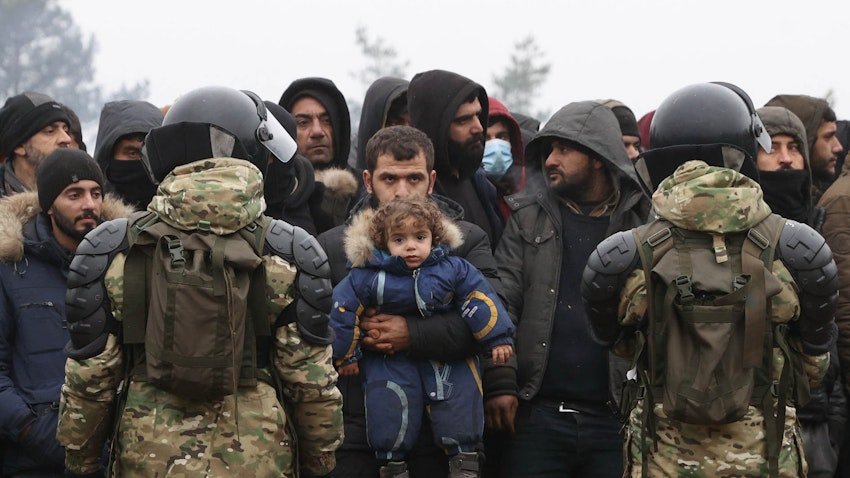
Iraq has become a key focus in European migration policy. This Iraq EU migration spending plan shows strong financial involvement. At the same time, the Iraq EU migration spending reflects growing cooperation on deportations.
European officials reviewed new policy updates during a high-level meeting. The discussion took place under the EU Council’s migration coordination group. This body focuses on managing migration beyond EU borders.
The documents reviewed are known as “action files.” These files outline current projects and plans. They also detail how the EU works with partner countries like Iraq.
In Iraq’s case, the EU aims to expand migration control measures. Officials want stronger cooperation on deportations. Therefore, migration remains central in political discussions between both sides.
Moreover, the EU continues to support Iraq’s national migration strategy. This approach focuses on reducing irregular migration. It also addresses causes like instability and displacement.
At the same time, the EU pushes for a formal deportation agreement. Negotiations between Iraq and the EU continue. These talks aim to increase the return of Iraqi migrants from Europe.
In addition, the EU plans to appoint a return liaison officer for Iraq. This role will coordinate deportation efforts. Authorities are still searching for a suitable candidate.
Financially, the Iraq EU migration spending shows significant investment. Total funding reaches around 273.4 million euros. This amount supports migration management and related programs.
The largest share comes from the NDICI-Global Europe instrument. This fund provides about 225 million euros between 2021 and 2027. Therefore, it forms the backbone of EU support.
Furthermore, the EU plans a special measure worth 30 million euros. Officials expect to approve this funding soon. It will add further support to migration-related projects.
Individual EU countries also contribute to this effort. Germany supports projects worth 10.9 million euros. These projects focus on migration and development programs.
Meanwhile, Sweden provides about 2.5 million euros through regional cooperation. Other contributions exist, but some details remain unclear. However, combined efforts show strong European involvement.
In addition, the EU uses different tools to improve cooperation. These include visa policies linked to deportation agreements. Although details remain limited, results appear effective.
The Iraq EU migration spending also reflects the broader EU strategy. Europe aims to manage migration before it reaches its borders. Therefore, it invests heavily in partner countries.
At the same time, Iraq’s role continues to grow in this framework. Increased cooperation shows mutual interests. Iraq seeks stability, while the EU seeks migration control.
This approach also raises important questions. Some experts highlight concerns about deportation policies. Others focus on the social impact within Iraq.
Nevertheless, the EU continues to expand its efforts. More projects and funding may follow in the coming years. Therefore, migration cooperation will likely deepen.
In conclusion, Iraq’s EU migration spending highlights a major policy shift. The EU allocated over 273 million euros to Iraq. This investment strengthens migration control and deportation cooperation.