

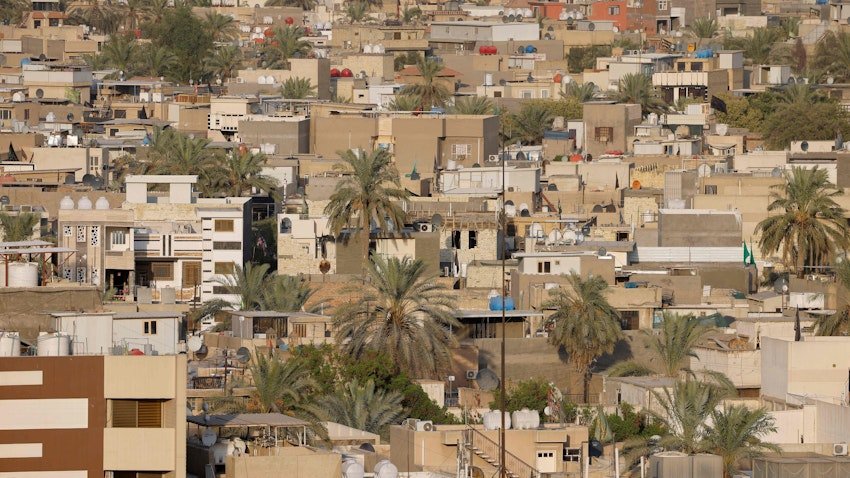
Baghdad – Iraq faces 100,000 informal housing crisis across the country. The Ministry of Planning confirmed more than 100,000 informal housing units nationwide. These units shelter between 500,000 and 600,000 residents.
Officials say rapid population growth fuels the problem. As cities expand quickly, housing demand rises sharply. However, legal housing supply fails to match this demand. Therefore, many families build homes without official approval.
Iraq faces 100,000 informal housing crisis as lawmakers delay key reforms. Authorities drafted a law to regulate informal settlements several years ago. Yet parliament did not pass the proposal. Political objections blocked several provisions in the draft.
Moreover, the ministry worked with UN-Habitat to prepare another draft law. Officials aimed to provide structured legal solutions. Nevertheless, lawmakers did not approve that proposal either.
Officials stress that the issue extends beyond traditional slums. Many families built houses on state-owned land without authorization. Some homes lack electricity, water, and sanitation. However, other units meet high construction standards. Despite this, authorities classify them as legal violations.
According to official census data, Iraq has 8,037,221 housing units nationwide. Out of this total, 1.3 percent fall under non-regular housing. This percentage equals about 104,000 units. These include mud houses, caravans, tents, and makeshift shelters.
Consequently, Iraq faces 100,000 informal housing crisis with complex legal and social dimensions. Urban planners must address land ownership disputes. At the same time, officials must protect agricultural land from illegal construction.
The government introduced Cabinet Resolution 320 of 2022. This resolution targets encroachments on agricultural land. In addition, authorities introduced Resolution 20 of 2025. This measure addresses unauthorized construction on municipal land.
Furthermore, officials allocated state land inside newly developed residential cities. They aim to provide organized housing alternatives. The government also supports affected families in accessing formal housing options.
Investment partnerships play a major role in this strategy. Authorities encourage local developers to expand major housing projects. These projects aim to meet minimum living standards. Therefore, officials hope to reduce pressure on informal settlements.
Urban experts argue that enforcement alone will not solve the issue. Instead, policymakers must combine legal reform with affordable housing expansion. They also need long-term planning frameworks.
In addition, population growth continues to increase housing demand. Iraq’s urban centers attract more families each year. Without strong planning, informal construction will likely continue.
Officials acknowledge that solving the crisis will take time. Legal challenges complicate land ownership cases. Social factors also influence settlement patterns. However, authorities insist that structured reforms have already begun.
Ultimately, Iraq faces 100,000 informal housing crisis that requires phased solutions. Policymakers now focus on balancing enforcement, housing expansion, and legal reform. If authorities maintain momentum, they could gradually reduce informal settlements across the country.