

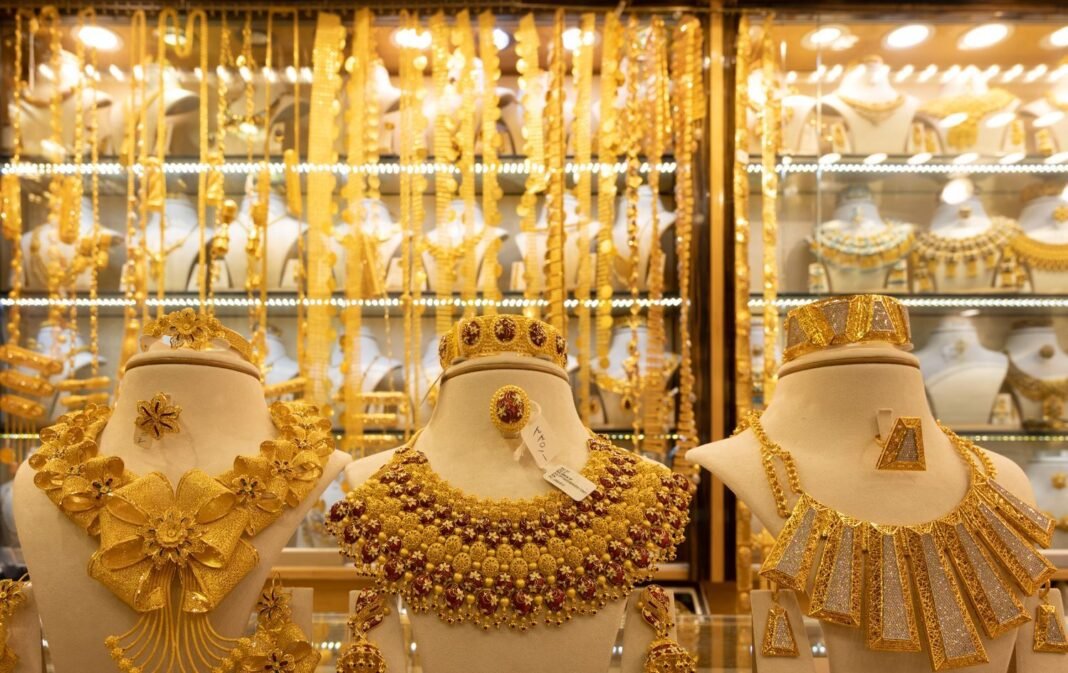
Iraq gold prices showed mixed movement across major city markets. Traders reported higher prices in Baghdad. Meanwhile, Erbil markets recorded slight declines. As a result, buyers compared prices closely before purchasing.
In Baghdad, Iraq gold prices increased at key trading locations. Gold dealers on Al-Nahr Street reported higher selling rates. The selling price for 21-carat gold reached 1,063,000 IQD per mithqal. The buying price stood at 1,059,000 IQD per mithqal. This rise reflected stronger demand.
Previously, the same gold traded at 1,059,000 IQD per mithqal. Therefore, traders noted a clear upward move. Gulf, Turkish, and European gold followed the same trend. Buyers showed interest despite the increase.
Iraq gold prices for locally produced gold remained lower. 21-carat Iraqi gold sold at 1,032,000 IQD per mithqal. The buying price reached 1,029,000 IQD per mithqal. This gap attracted budget-focused buyers.
Jewelry shops displayed varied pricing across Baghdad. Gulf gold sold between 1,065,000 and 1,075,000 IQD per mithqal. Iraqi gold ranged between 1,035,000 and 1,045,000 IQD per mithqal. These differences reflected design and craftsmanship factors.
Traders explained that craftsmanship affects final prices. Imported designs often cost more. Local gold remains more affordable.Therefore, buyers choose based on preference and budget.
Iraq gold prices moved differently in Erbil.As well as, Market data showed lower prices compared to Baghdad. 22-carat gold sold at 1,157,000 IQD per mithqal. 21-carat gold reached 1,105,000 IQD per mithqal. 18-carat gold sold at 948,000 IQD per mithqal.
Erbil traders linked the dip to weaker demand. Many buyers delayed purchases. As a result, sellers adjusted prices. This adjustment aimed to encourage market activity.
Iraq gold prices often reflect regional demand differences. Baghdad markets usually see higher trading volumes. Erbil markets respond faster to buyer behavior. These dynamics create price variation.
Economic conditions also influence gold demand. Gold often serves as a safe store of value.However, When currency fluctuates, buyers turn to gold. Therefore, gold prices react quickly to market signals.
Merchants reported steady customer interest. Some buyers sought jewelry. Others focused on savings and investment. This mix shapes daily pricing trends.
Retailers advised customers to track prices carefully. Small changes can affect purchase timing.As well as, Many buyers wait for favorable dips. Others buy immediately to avoid further increases.
Iraq gold prices also depend on global gold trends. International market movements influence local rates.In addition, Currency exchange rates add further pressure. Traders balance these factors daily.
Gold shops adjust prices several times each day. They respond to supply and demand.However, Clear communication helps maintain trust. Stable pricing supports long-term customer relationships.
Consumers often compare Baghdad and Erbil prices. Travel and transport costs affect decisions. However, local convenience usually guides purchases.
Market observers expect continued fluctuations. Demand patterns may shift again.As well as, Traders will monitor buyer activity closely. Any economic signal could move prices.
Iraq gold prices remain a key market indicator. They reflect confidence, savings behavior, and economic sentiment. Therefore, daily updates attract strong attention.