

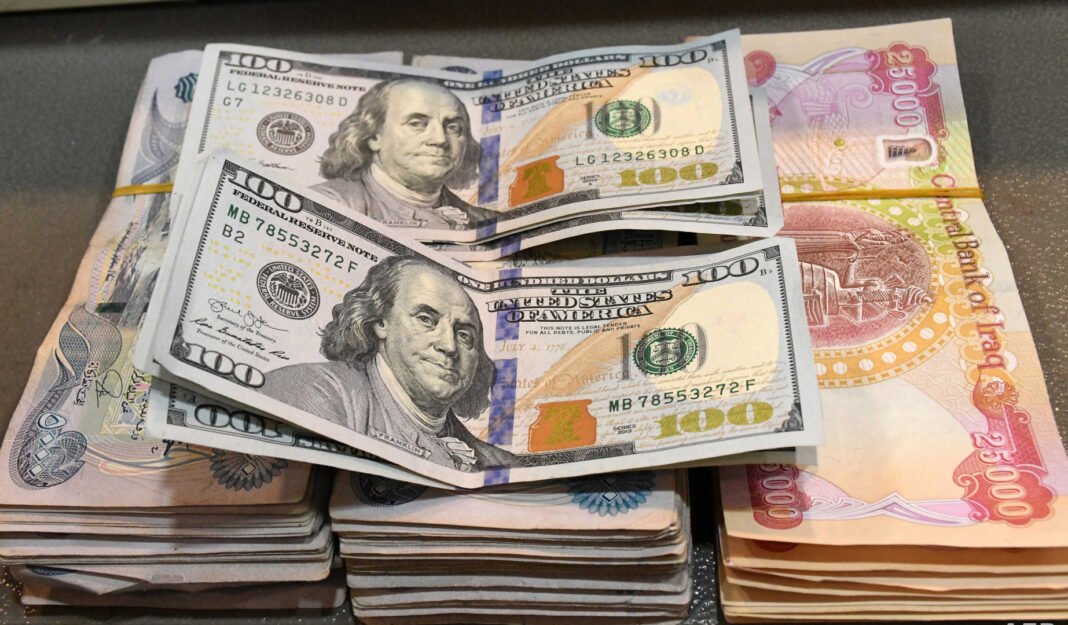
Baghdad – The US dollar rose sharply in Iraq, reaching new levels in Baghdad and Erbil. Traders reported that the dollar climbed past the 150,000-dinar mark per 100 dollars. This increase affects both local buyers and businesses across the country.
In Baghdad, exchange offices sold the dollar at 150,500 dinars and bought it at 149,500 dinars. Meanwhile, in Erbil, selling prices reached 150,150 dinars, and buying prices stood at 150,000 dinars. These changes show a clear upward trend in Iraq’s currency market. Residents have started adjusting their daily spending and savings strategies to account for the higher rates.
The dollar rises due to increased demand and ongoing economic uncertainty. Many traders said investors prefer the US dollar as a safer option. Consequently, local businesses face higher costs for imported goods, which may affect prices of food, electronics, and household items. The rise also impacts small businesses, as they often exchange smaller amounts frequently and feel the effect of fluctuating rates more directly.
Moreover, the dollar rises amid fluctuations in global currency markets. Analysts believe that regional economic factors and political developments strongly influence the exchange rate. Therefore, residents and companies closely monitor daily market updates. Many citizens check exchange offices or online platforms before deciding when to convert or spend money.
Banks and private exchanges in Baghdad reported similar trends. Al-Kifah and Al-Harithiya exchange offices recorded prices of 150,100 dinars per 100 dollars. This level marks a significant rise from the previous day’s close at 149,000 dinars. Traders mentioned that demand for US dollars has grown due to upcoming payments for imported goods and the uncertainty of local economic policies.
Officials advise citizens to follow market trends before making large currency exchanges. Many recommend converting money strategically to avoid losses. At the same time, traders continue to adjust rates according to supply and demand. Some analysts warn that sudden shifts in demand or government announcements could lead to sharp spikes in rates.
Experts predict that the dollar rises might continue if economic pressures persist. They warn that prices for imported goods and services may increase, adding pressure on households and small businesses. Furthermore, businesses should plan for potential fluctuations in the coming weeks, especially as global oil prices and regional trade conditions influence Iraq’s economy.
The upward trend demonstrates how currency markets react quickly to both local and international events. Residents in Baghdad and Erbil increasingly rely on daily updates to guide financial decisions. Many citizens now use apps or social media groups to track the dollar’s movement before shopping or sending money abroad.
Additionally, traders believe that the dollar rises may affect investments in local currency. People are more likely to hold dollars rather than dinars, which could influence lending, saving, and consumption patterns in the future. Economists suggest that long-term planning is essential for households and businesses to manage risks effectively.
The Iraq Dollar Rises trend continues to dominate conversations in markets, banks, and local businesses. As the country navigates economic pressures and uncertainty, both citizens and traders prepare for more fluctuations. Daily updates and market awareness have become key strategies for those living in Baghdad, Erbil, and other cities.