

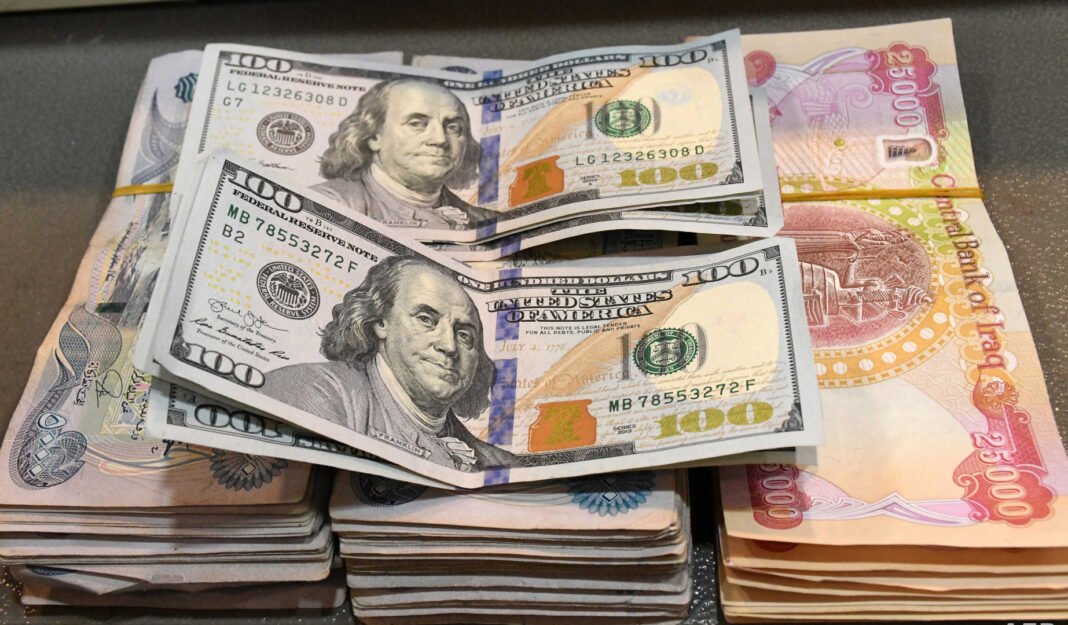
The Iraq dollar exchange shows mixed trends as markets open across Baghdad and Erbil. Moreover, traders face small fluctuations that influence daily business. Therefore, monitoring currency movement remains crucial for investors and citizens alike.
In Baghdad, the US dollar opened trading steadily. Exchange shops sold the dollar at 149,500 dinars per 100 USD. Buying prices stood at 148,500 dinars. These figures remained unchanged from the previous session. Consequently, Baghdad’s currency market shows stability despite global fluctuations.
Meanwhile, Erbil recorded a slight dip in dollar value. The US dollar fell by 0.2%, reflecting minor local variations. Sellers offered the dollar at 148,650 dinars, while buyers paid 148,450 dinars. Therefore, traders in Erbil faced slightly lower rates than Baghdad.
The Iraq dollar exchange impacts both commerce and daily life. Businesses that import goods track the USD closely. Small changes in rates affect costs, profits, and pricing. Similarly, individuals sending money or purchasing imports experience direct effects. Consequently, even a 0.2% shift matters in economic terms.
Traders explain that Baghdad’s steady dollar reflects market confidence. In contrast, Erbil’s slight decline may result from regional cash flow differences. Moreover, currency availability, banking operations, and trade volume influence local rates. Therefore, local context drives Iraq dollar exchange movements differently.
Analysts recommend careful observation of trends. They note that consistent monitoring helps mitigate risks. Investors can adjust trading strategies according to daily changes. At the same time, businesses can plan purchases more efficiently. Consequently, awareness of fluctuations benefits multiple sectors.
The Iraq dollar exchange shows resilience despite external pressure. Global USD trends, inflation, and regional politics can affect rates. However, Baghdad’s market stability indicates a strong local response. In Erbil, minor drops suggest localized supply and demand adjustments. Therefore, active market management supports economic stability.
Furthermore, the exchange reflects the Iraqi dinar’s role in national finance. Traders, businesses, and individuals rely on accurate pricing to make decisions. By comparing Baghdad and Erbil rates, authorities can track economic patterns. As a result, Iraq dollar exchange trends serve as a valuable indicator for policy planning.
Finally, markets remain open and responsive. Traders expect minor daily adjustments in Baghdad and Erbil. Investors and residents monitor rates closely. Therefore, Iraq dollar exchange continues to influence commerce, savings, and investment decisions nationwide.