

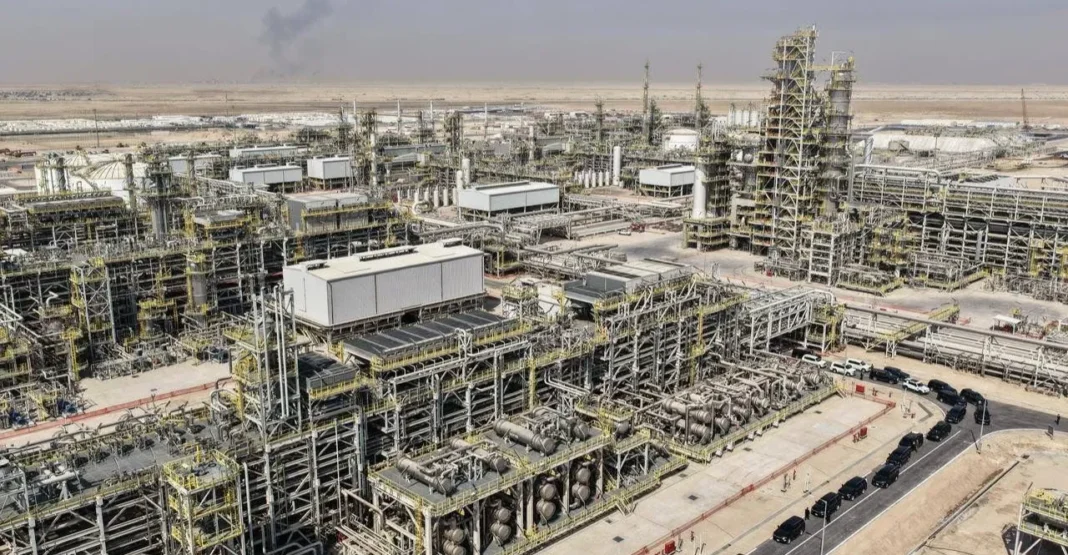
Iraq has strengthened its energy sector by commissioning a new Fluid Catalytic Cracking (FCC) unit. The South Refineries Company now produces 4,200 cubic meters of high-octane gasoline for domestic consumption. Therefore, Iraq moves closer to self-sufficiency in refined petroleum products.
Officials from the Ministry of Oil confirmed the FCC unit began final operations recently. Hussam Hussein Wali, director general of the refinery, highlighted its role in reducing dependency on fuel imports. The launch supports Iraq’s long-term goal of managing domestic consumption efficiently.
Iraqi caretaker Prime Minister Mohammed Shia al-Sudani emphasized that Iraq aims to export oil derivatives by 2030. Previously, Iraq halted fuel imports after reaching self-sufficiency in gasoline, diesel, and kerosene. The directive instructed the Oil Ministry to regulate local consumption and use surplus production for exports.
Despite these achievements, Iraq continues to face challenges in its energy sector. Security threats, political instability, and aging infrastructure limit production efficiency. Gas flaring and opaque contracts further complicate operations, keeping demand for refined products high. Analysts note that overcoming these challenges remains essential for sustainable self-sufficiency.
The FCC unit will increase high-octane gasoline output and support local supply stability. Refinery officials said the move reduces reliance on imported fuel and strengthens Iraq’s energy security. Consumers can expect a more stable fuel supply in the coming months.
Energy experts highlighted that the FCC unit contributes to Iraq’s broader economic strategy. Increased production capacity allows Iraq to manage domestic needs while preparing for future exports. By producing high-quality gasoline locally, Iraq can compete in regional markets.
The Oil Ministry also focuses on modernizing refineries and reducing inefficiencies. Investments in technology and infrastructure aim to improve productivity. Officials expect these efforts to attract international partnerships and support energy diversification.
Analysts added that domestic production reduces costs and limits currency outflows. Surplus refined products can be exported, generating revenue for the national economy. Therefore, the FCC unit represents both energy and financial benefits.
Iraq’s OPEC membership positions it as a major oil producer. Self-sufficiency in refined products strengthens its global market position. Combined with planned exports, the FCC unit enhances Iraq’s reputation as a reliable energy supplier.
Officials plan to expand refinery capabilities further. Upgrading facilities and commissioning new units will help meet future demand. These measures ensure Iraq maintains energy independence and economic growth simultaneously.