

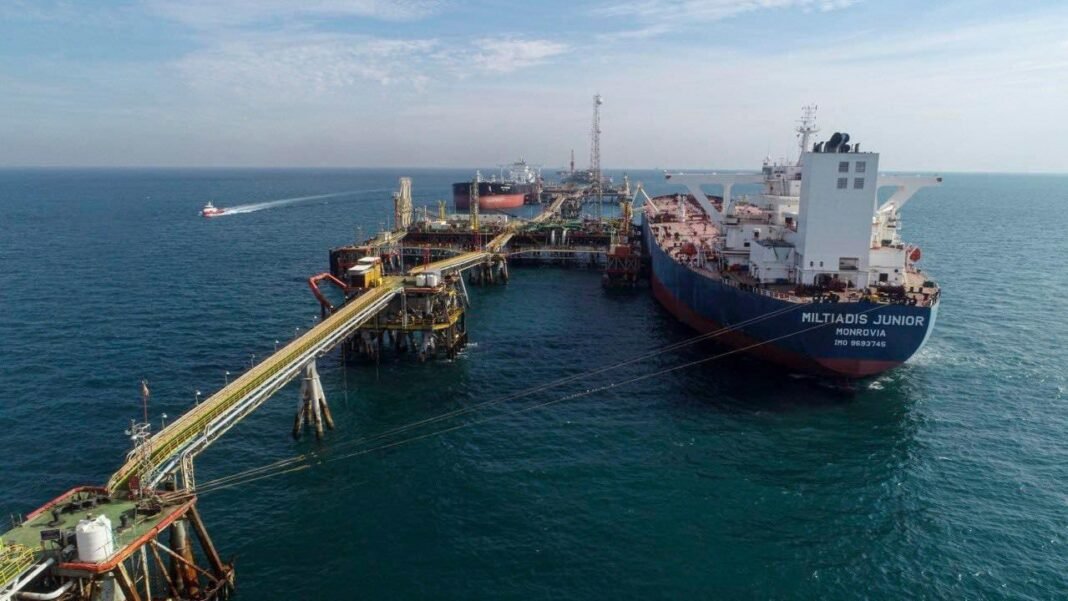
Iraq oil derivatives exports stand at the center of a new national energy strategy. Moreover, leaders aim to reshape the economy through stronger industrial output. As a result, Iraq seeks higher value from its energy resources.
Prime Minister Mohammed Shia Al-Sudani outlined the plan during an energy event in Baghdad. He explained that Iraq plans to enter global markets with refined oil products. Therefore, Iraq focuses on long-term export growth.
The government targets exporting 40 percent of refined oil products. This goal supports economic diversification and stronger trade links. Consequently, officials prioritize industrial development.
For years, Iraq wasted large amounts of gas through flaring. However, recent discoveries changed this situation. Now, associated gas production reaches about 132 million cubic meters.
The government works to fully invest this gas resource. Moreover, energy workers push projects forward across oil fields. The plan aims to stop gas waste and boost supply.
Electricity production also reached a historic level. Iraq now generates 29,000 megawatts nationwide. Therefore, power supply improved during peak demand periods.
New transmission and distribution projects support the grid. In addition, transformer stations reduced pressure during extreme heat. These upgrades improved service reliability.
The government also plans major expansion in power generation. Officials prepared projects with total capacity of 57,000 megawatts. Furthermore, international companies support many of these plants.
Thirty-four power stations involve cooperation with global energy firms. This approach brings expertise and modern technology. As a result, Iraq strengthens infrastructure capacity.
Iraq oil derivatives exports also depend on financial stability. Budget figures show strong income from energy sales. Oil revenues form the backbone of public finance.
Federal income exceeded 82 trillion dinars in one fiscal period. Oil sales contributed about 90 percent of total revenue. Meanwhile, non-oil income remained limited.
These figures highlight the need for economic reform. Therefore, leaders push industrial exports beyond crude oil. Iraq oil derivatives exports support this shift.
By focusing on refining and energy efficiency, Iraq targets sustainable growth. Moreover, export diversification reduces dependence on raw oil sales. Iraq oil derivatives exports reflect this vision.