

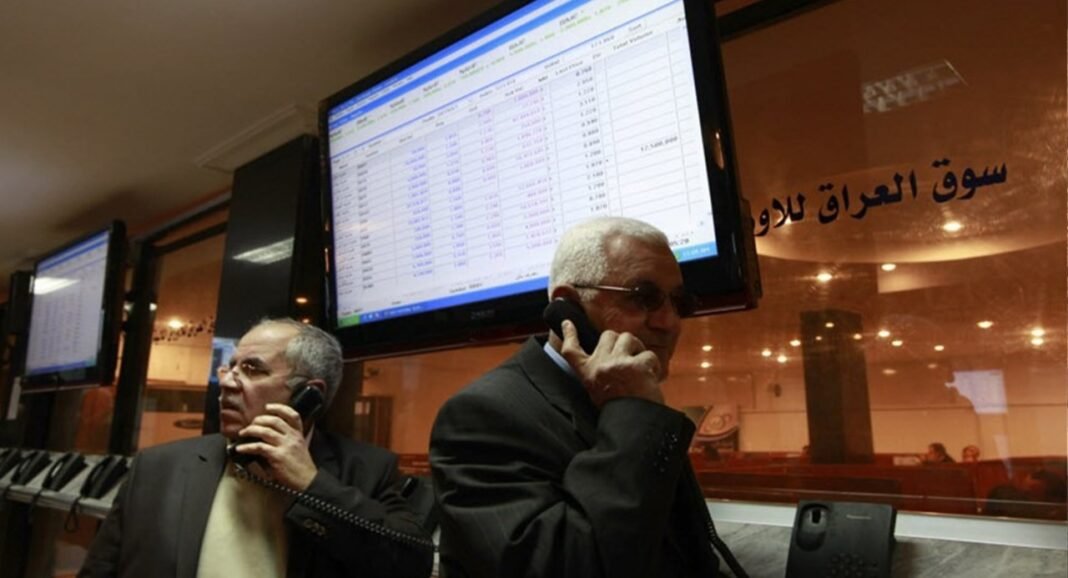
Iraq stock exchange activity showed moderate movement as weekly trading reached notable levels. First, market officials reported total transactions above 1.7 billion Iraqi dinars. Consequently, Iraq stock exchange performance reflected cautious investor behavior. Therefore, trading activity remained steady but slower than earlier periods.
During the week, investors traded shares in sixty-nine listed companies. Meanwhile, twenty-five firms recorded no trading activity. This situation occurred because buy and sell orders did not match. As a result, liquidity remained uneven across different sectors. Additionally, ten listed companies stayed suspended due to missing required disclosures. Therefore, compliance issues continued to affect market participation.
The market recorded more than two thousand five hundred individual transactions. Moreover, total trading value reached about 1.71 billion dinars. However, this figure represented a significant decline compared to the previous week. Consequently, Iraq stock exchange turnover dropped by nearly seventy percent. Analysts linked the decline to cautious sentiment and selective trading.
Index performance also reflected weaker momentum. The main ISX60 index closed below one thousand points. Furthermore, the index fell by more than one percent during the session. As a result, market confidence showed slight pressure. Nevertheless, traders continued monitoring opportunities across active sectors.
The Iraq stock exchange operates five sessions each week. Trading runs from Sunday through Thursday. Additionally, the exchange lists one hundred four companies across diverse sectors. These sectors include banking, telecommunications, industry, agriculture, insurance, tourism, hotels, and services. Therefore, the market offers broad exposure to the national economy.
Foreign investors maintained limited but visible participation. During the week, overseas buyers purchased fifty million shares. These purchases occurred through three transactions with modest value. At the same time, foreign investors sold a smaller number of shares through multiple trades. Consequently, foreign activity remained balanced but cautious.
Market observers noted that transparency and disclosure remain key concerns. Improved reporting could restore confidence and attract higher trading volumes. Moreover, consistent regulation supports long-term market growth. Therefore, authorities continue encouraging listed firms to meet disclosure standards.
Despite the weekly decline, Iraq stock exchange activity still signals gradual market development. Regular sessions, diverse listings, and foreign participation support stability. Consequently, investors continue to watch trends closely for recovery signs. Overall, the market remains an important platform for capital movement and economic engagement in Iraq.