

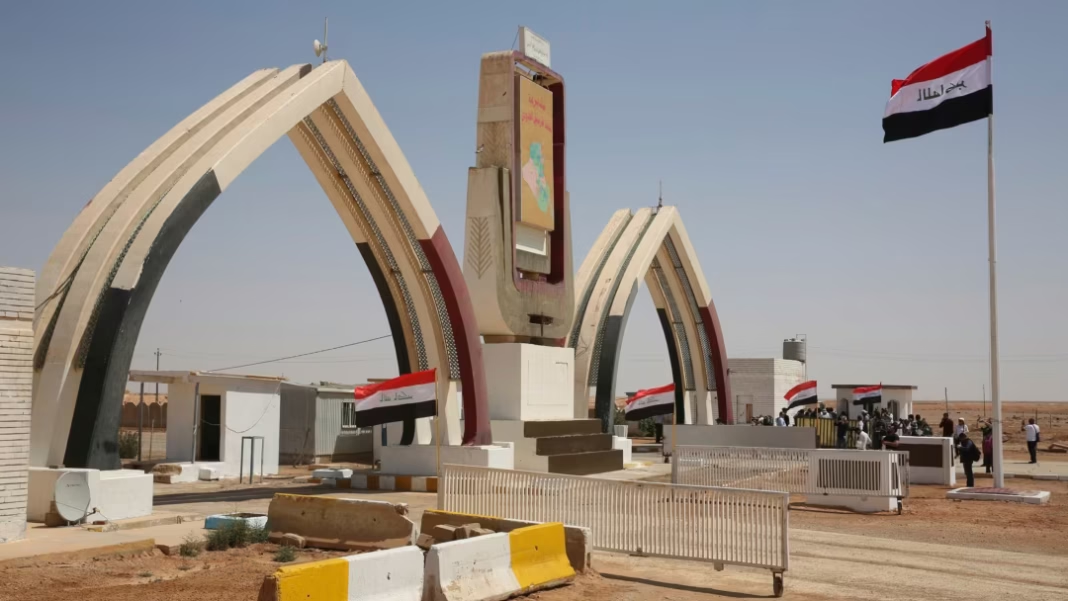
Iraq Trebil trade shows a brief slowdown after new customs tariffs took effect at the border crossing with Jordan. However, officials and economists expect a recovery as traders adjust to the new rules.
First, border traffic declined soon after authorities applied higher customs duties. Truck movement dropped by about fifteen percent. Local administrators noticed fewer vehicles entering Iraq through Trebil. Consequently, commercial activity slowed across nearby markets.
Next, customs officials applied the new tariff system without exceptions. They enforced the same rules on all shipments. This approach aimed to create fairness and transparency. Still, traders reacted cautiously during the early phase.
Moreover, the government raised customs duties across many imported goods. Rates ranged from very low to relatively high levels. However, officials excluded essential goods from the increase. They wanted to protect daily consumer needs.
Meanwhile, economists stressed that the decline will not last long. They pointed to existing trade agreements between Iraq and Jordan. These agreements reduce pressure on traders and importers. Therefore, trade flows should stabilize.
In addition, a bilateral deal allows hundreds of Jordanian products to enter Iraq without customs duties. This exemption supports continued commercial movement. Traders benefit from lower costs and faster clearance.
Also, the agreement reduces handling fees at Jordan’s main port. Lower port costs encourage exporters to ship goods toward Iraq. As a result, supply chains remain attractive.
Furthermore, Trebil plays a vital role in Iraq’s import system. The crossing handles nearly half of total imports. Goods worth billions of dollars pass through the border. This scale gives Trebil strong strategic importance.
Because of this role, traders rarely abandon Trebil routes. Instead, they adjust pricing and logistics. Over time, volumes usually recover after policy changes.
Additionally, transport companies monitor market reactions closely. They adapt schedules and cargo types. Flexibility helps reduce losses during transition periods.
At the same time, officials believe tariff clarity will support long-term growth. Clear rules help businesses plan ahead. Predictability encourages investment and trade confidence.
Moreover, customs authorities aligned the new tariff schedule with global standards. The system covers thousands of product categories. This alignment simplifies classification and compliance.
Despite early hesitation, importers continue to test the new framework. Many expect smoother operations soon. Confidence often returns after initial uncertainty fades.
Iraq Trebil trade also benefits from geographic advantages. The route offers direct access between two markets. Distance and time savings matter greatly to traders.
Furthermore, local economies near Trebil depend on cross-border commerce. Shops, transport firms, and services rely on steady traffic. A rebound will support these communities.
Experts also expect policy fine-tuning if challenges persist. Authorities often review feedback from traders. Dialogue helps improve implementation.
Overall, Iraq Trebil trade reflects a temporary adjustment phase. New tariffs caused caution, not collapse. Structural incentives still favor strong trade volumes.
As traders adapt, activity should rise again. The border crossing will likely regain momentum. Regional trade links remain strong.
Iraq Trebil trade stands resilient due to agreements, scale, and location. Short-term dips rarely change long-term patterns.