

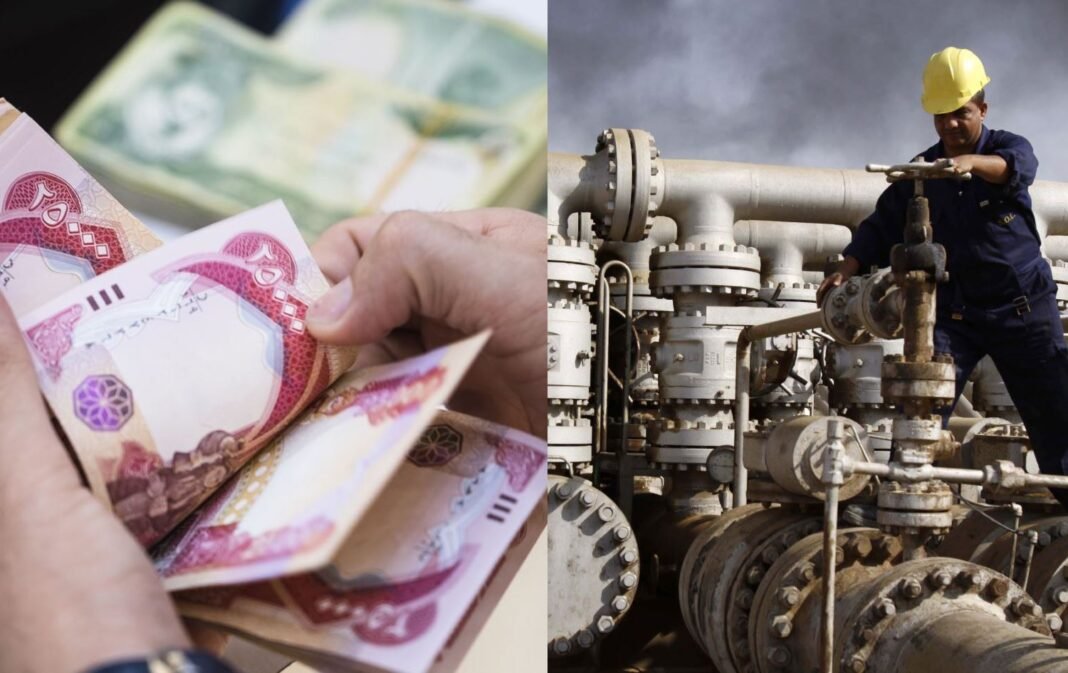
Oil dominates Iraq’s public finances and shapes economic planning nationwide. Recent figures show strong income levels driven mainly by crude exports. As a result, oil continues to fund most government activities. Moreover, officials rely heavily on energy income to cover spending needs. This reality highlights Iraq oil revenue dependence clearly.
Iraq collected more than seventy billion dollars in federal revenue during the period reviewed. Oil alone generated around ninety percent of this total. Therefore, crude exports remained the backbone of national income. Meanwhile, non-oil revenue contributed only a small share. Consequently, budget balance depends strongly on oil market conditions.
Oil earnings reached more than sixty billion dollars during the same period. In contrast, non-oil income stayed near seven billion dollars. Thus, the gap between oil and non-oil revenue remained wide. Moreover, this imbalance exposed structural economic weaknesses. Iraq oil revenue dependence remained unchanged.
Iraq continues to use oil income to fund salaries and services. Additionally, oil revenue supports infrastructure and social programs. However, this reliance increases vulnerability to price shocks. Therefore, fiscal stability links directly to global oil markets. Policymakers understand this risk clearly.
Economic advisers point to long-term challenges behind this structure. Decades of conflict weakened productive sectors outside oil. Furthermore, sanctions restricted trade and investment for many years. Political instability also slowed reform efforts significantly. As a result, diversification attempts faced repeated setbacks.
Iraq tried to expand non-oil revenue sources over time. However, progress remained slow and limited. Moreover, administrative hurdles reduced private sector growth. Therefore, oil continued to dominate state income. Iraq oil revenue dependence persisted across budgets.
Despite these challenges, officials still discuss reform options. They encourage investment in agriculture and industry. Additionally, leaders promote customs reform and tax collection improvements. However, these measures require stability and time. Thus, oil still funds most spending today.
Global energy demand continues to influence Iraq’s fiscal outlook. Higher prices boost revenue quickly. Lower prices strain budgets immediately. Therefore, Iraq watches oil markets closely.
Experts warn about long-term sustainability risks. They stress the need for broader economic foundations. Moreover, they call for stronger private sector participation. Still, oil remains the fastest revenue source available. Thus, policymakers rely on it heavily.
In conclusion, oil fuels nearly all of Iraq’s public income. Non-oil sectors contribute modest amounts only. Consequently, the economy remains exposed to external shocks. Until diversification succeeds.