

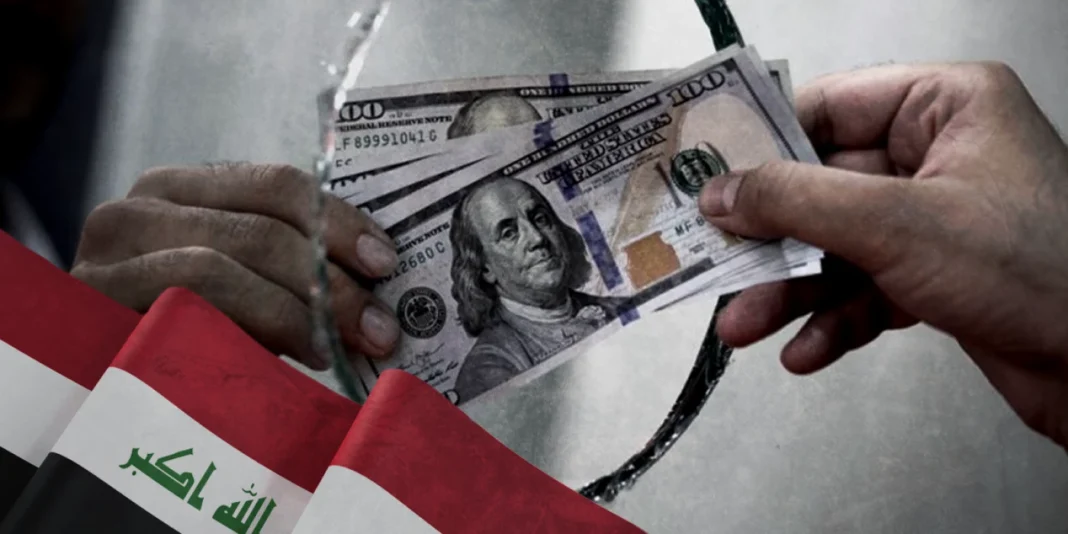
Iraq’s money supply outside banks has reached unprecedented levels, raising concerns among financial experts about the stability of the country’s banking system. Nearly 92 percent of Iraq’s 98 trillion dinar money supply—equivalent to about $69 billion—remains outside formal financial institutions, according to former Central Bank of Iraq (CBI) official Mahmoud Dagher.
Dagher told that individuals, traders, and contractors continue to prefer cash transactions over bank deposits. He attributed this trend to weak public trust in banks, limited adoption of electronic payments, and recurring banking crises that discourage savings.
Moreover, he warned that Iraq’s money supply outside banks drains liquidity and weakens the Central Bank’s ability to manage inflation and credit growth. “When most money is outside the system, monetary policy loses its effect,” Dagher said, highlighting the risks to economic stability and lending efficiency.
Official CBI data confirms that 53 percent of the country’s money supply is now in circulation, compared with 49 percent a year earlier. Only 19 percent of adults have bank accounts, while just 10 percent use digital payment methods. These figures underscore the deep challenges facing Iraq’s financial inclusion efforts.
In response, the government has launched initiatives to pull idle cash back into the formal economy. These include expanding salary transfers through banks, strengthening deposit insurance, and accelerating the rollout of e-payment systems. Officials believe these measures will improve liquidity, enhance financial oversight, and reduce reliance on cash-based transactions.
Economists argue that reducing Iraq’s money supply outside banks is essential to modernizing the country’s financial system and supporting long-term growth. They stress that confidence in banking services must be rebuilt through transparency, faster transactions, and improved digital infrastructure.
If successful, the reforms could gradually decrease Iraq’s money supply outside banks, restore monetary balance, and strengthen the foundations of Iraq’s economic stability.