

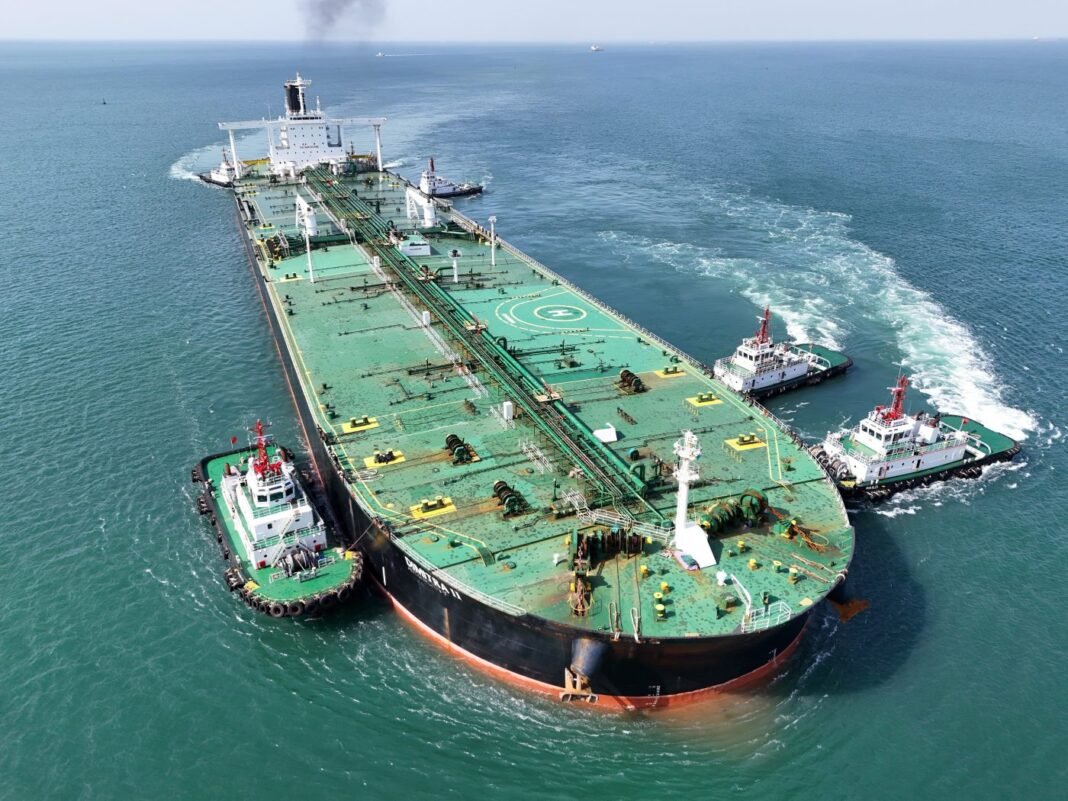
Iraq’s oil exports to the United States dropped sharply last week, marking a significant shift in trade patterns. According to new data, the Iraq oil export decline was the steepest among major suppliers. This development may affect Iraq’s oil revenues and its position in the U.S. energy market.
The United States imported an average of 5.45 million barrels of crude oil per day last week. This shows a slight decrease of 35,000 barrels per day compared to the previous week. Despite this modest overall dip, Iraq’s contribution to U.S. imports saw a major fall.
Iraq exported only 84,000 barrels of oil per day to the U.S. last week. The week before, it had exported 214,000 barrels per day. This means a dramatic drop of 130,000 barrels per day in just one week. The Iraq oil export decline is one of the most noticeable reductions among all exporting countries.
Meanwhile, Canada remained the largest crude oil supplier to the United States. Last week, the U.S. imported 3.83 million barrels per day from Canada. This amount made up the bulk of American oil imports. Mexico followed with 526,000 barrels per day, and Brazil came in third with 467,000 barrels per day.
Ecuador contributed 184,000 barrels per day, while Nigeria supplied 142,000 barrels. Venezuela and Colombia exported 130,000 and 79,000 barrels per day, respectively. The United States did not import any crude oil from Saudi Arabia or Libya during the same period.
These changes show how U.S. oil import sources can shift week by week. For Iraq, this sharp drop may raise concerns about its stability in the U.S. energy market. The Iraq oil export decline may also reflect broader trends, such as shifts in demand or changes in political and logistical factors.
Experts suggest that such fluctuations are often temporary, but repeated declines could reduce Iraq’s influence in global oil trade. U.S. importers may also be seeking more diversified or secure energy sources.
Moving forward, Iraq may need to strengthen its oil export strategy. This could include stabilizing supply chains, improving production efficiency, or securing longer-term contracts. If demand from the U.S. continues to fall, Iraq might turn to other markets to maintain its export levels.